
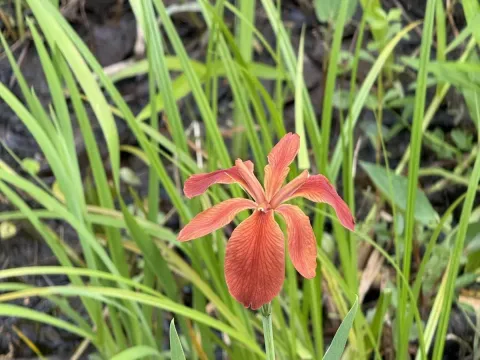
Copper Iris
Iris fulva
The copper iris (Iris fulva) is a distinctive member of the Iridaceae family, recognized for its unique terracotta or copper-colored blossoms. Originating from the swamplands and river basins of the southern United States, it is a quintessential bog plant adapted to wetland ecosystems.
What the section contains
Copper Iris
Botanically, it features slender, sword-shaped foliage reaching up to 90 centimeters in height. Its rhizomes are designed to thrive in anaerobic, water-saturated soils, distinguishing it from most bearded irises that require excellent drainage. The plant exhibits a vigorous growth habit when provided with sufficient space.
This species has specific soil requirements, preferring acidic environments rich in organic matter. While it is highly tolerant of constant moisture and can even grow in shallow water up to 15 centimeters deep, it requires a stable environment to prevent root stress during the growing season.
Sunlight exposure is a key factor for successful cultivation. The copper iris thrives in full sun, which promotes robust floral development and brightens the unique hue of the petals. Partial shade is acceptable in hot climates, provided that the soil moisture levels remain consistently high.
Maintenance involves seasonal fertilization using acidic plant food to support healthy rhizome expansion. During winter, it is advisable to ensure the rhizomes remain submerged or heavily mulched to prevent desiccation in regions prone to severe frost and fluctuating water levels.
The most common disease threats include bacterial soft rot and various leaf spot fungi, which often manifest in stagnant, warm conditions with poor air circulation. Proper spacing between clumps is essential to mitigate these risks effectively throughout the season.
Pest issues typically involve iris borers and aphids, which target the foliage and floral stalks. Monitoring for signs of insect damage in the early spring is recommended, as early intervention prevents the rapid infestation of the entire colony.