
Cloth of Gold crocus
Crocus angustifolius
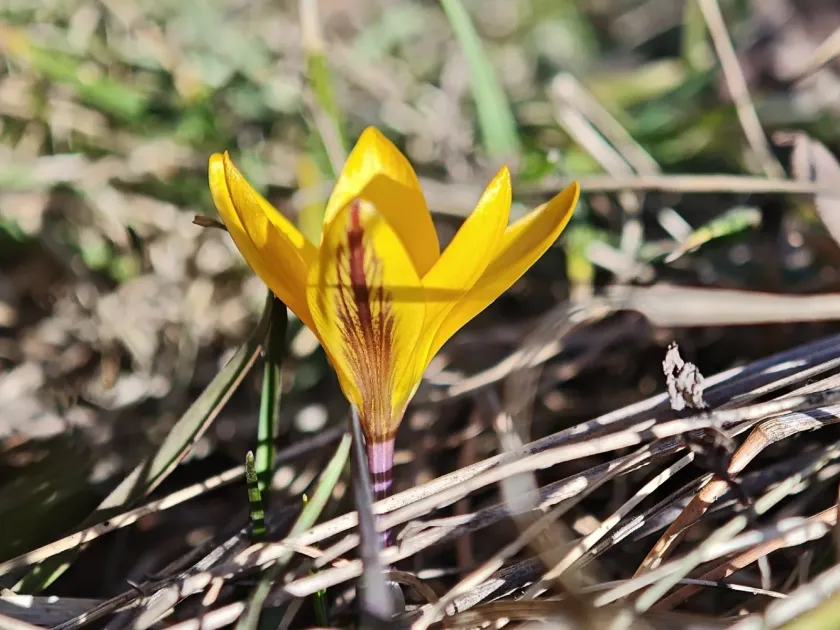
Description
Sowing dates
The Cloth of Gold crocus (Crocus angustifolius) belongs to the Iridaceae family and is a popular perennial cormous plant. Planting is typically performed in late summer or early autumn to ensure the bulbs establish roots before the winter dormancy.
Ideal planting timing is late August through September. Bulbs should be placed at a depth of 7–10 cm in well-drained soil, ensuring they have enough space for healthy cormlet development during the growing season.
Propagation is primarily achieved by dividing the offsets or cormlets after the foliage has died back. This should be done every few years to prevent overcrowding, which can diminish the size and quantity of flowers.
Seed propagation is possible, though it requires patience as the plants typically reach their first flowering stage only after three to four years of consistent growth in nursery beds.
Proper spacing and depth are essential for successful cultivation, as they prevent competition between bulbs and ensure that the plants have adequate access to nutrients and light when they emerge in spring.
Growing requirements
This species thrives in sunny locations with well-drained, fertile soil. Excessive shade leads to weak stems and reduced flower production, making it unsuitable for dense, shaded garden areas.
Soil type should be light, preferably sandy loam, with a neutral or slightly alkaline pH. Drainage is the most critical factor; even brief periods of waterlogging during the dormant summer phase can lead to fatal corm rot.
Moisture requirements vary throughout the year: moderate water is needed during the active growth period in spring, whereas the corms require a dry, warm environment during their summer dormancy to mature properly.
The Cloth of Gold crocus is hardy in temperate climates. While it can withstand freezing temperatures, a light mulch layer is recommended in regions with severe winters and little snow cover to protect the corms.
Fertilization should be handled carefully. Applying a balanced nitrogen-phosphorus-potassium fertilizer in early spring supports vigorous foliage, while potash applications in autumn strengthen the corm for the following year.
Main diseases and pests
Fungal diseases, including Fusarium wilt and various types of rot, represent the primary threat to this crop. These pathogens thrive in overly wet conditions and can spread rapidly if the drainage is inadequate.
Pests like onion flies and wireworms can damage the underground corms, causing the plant to wither. Pre-planting treatment of bulbs with suitable systemic insecticides is an effective preventive measure.
Slugs and snails may consume the tender emerging leaves in early spring. Controlling these pests requires maintaining a clean garden environment and, if necessary, using physical barriers or organic bait.
Rodents such as voles and mice often feed on the dormant corms in winter. Installing wire mesh around the planting area is a highly effective way to prevent significant loss of the bulb stock.
General hygiene, such as removing infected plant debris and rotating planting sites every few years, remains the most effective long-term strategy for managing disease pressure in crocus beds.