
Crested iris
Iris cristata
Description
Growing requirements
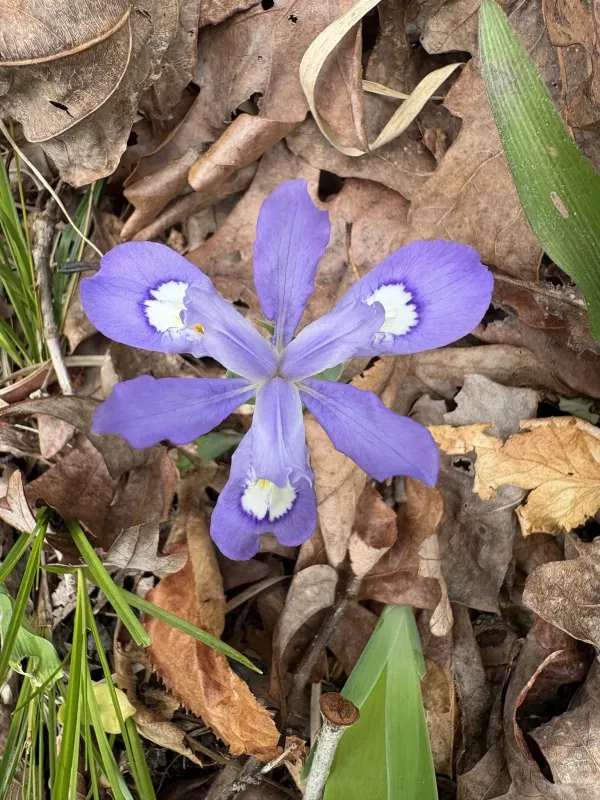
The Crested iris (Iris cristata) is a perennial flowering plant belonging to the Iridaceae family. It is native to the eastern parts of the United States, typically found in woodland habitats and on rocky hillsides.
Botanically, this species is defined by its low-growing rhizomes that create a creeping habit. The leaves are narrow and bright green, forming a dense, grassy foliage that remains attractive throughout the growing season.
Regarding site requirements, Iris cristata thrives in partial shade. It requires rich, well-draining soil that is slightly acidic. Providing organic mulch helps to retain soil moisture while keeping the rhizomes cool during summer heat.
The plant is relatively low-maintenance, requiring consistent watering during dry periods, but it is sensitive to waterlogged conditions which can lead to quick decay. Proper spacing is essential to allow for air circulation between the leaves.
In landscaping, this iris is primarily used as a shade-tolerant groundcover for rock gardens, woodland borders, and as a naturalistic carpet under deciduous tree canopies.
Main diseases and pests
The most significant threat to the Crested iris is crown and rhizome rot, which typically occurs in poorly drained soils. Excess moisture during dormancy can lead to the total collapse of the plant colony.
Fungal infections such as leaf spot can occur when humidity levels are persistently high. Improving ventilation around the plants and avoiding overhead watering are effective preventative measures for the home gardener.
Slugs and snails are the primary pests that damage the succulent foliage of the Crested iris. These pests are particularly active during cool, damp spring nights and can cause significant cosmetic damage to the leaves.
Aphids may occasionally infest the developing flower buds, causing stunted growth or misshapen blooms. Early detection and the application of mild insecticidal soaps are usually sufficient to control such infestations.
Winter care is vital; if the plants are exposed to freeze-thaw cycles without sufficient mulch cover, the rhizomes can be pushed out of the soil. Applying a light layer of pine needles or wood chips helps protect them.