
Corsican Romulea
Romulea corsica
Description
Growing requirements
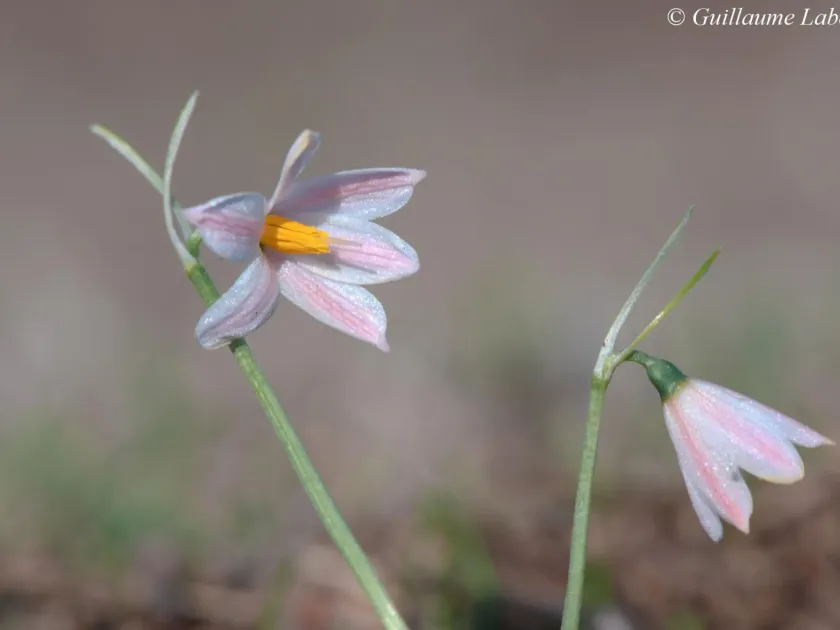
Corsican Romulea (Romulea corsica) is a herbaceous perennial belonging to the Iridaceae family. This species is a native endemic primarily found in Corsica and Sardinia, where it thrives in rocky habitats and open, well-drained grassy areas typical of Mediterranean regions.
The botanical structure of the plant consists of a small corm that serves as a storage organ during the dry summer dormancy period. It features narrow, grass-like basal leaves and produces cup-shaped flowers that appear during the spring, reflecting its evolutionary adaptation to the local climate.
Cultivation requirements necessitate a focus on excellent drainage and intense sunlight. The soil must be gritty and lean, preventing moisture retention that could cause the corm to rot. In artificial environments, creating a raised bed or a rock garden setting is highly recommended for success.
The climate needs for this species align with the Mediterranean pattern, favoring mild, moist winters that trigger growth and flowering. Growers in temperate zones must ensure frost protection, as the plant is not adapted to harsh, freezing winters, which can damage the dormant corms.
In terms of хозяйственное usage, it is strictly an ornamental plant sought after by enthusiasts for rock gardens. Its cultivation is limited to specialized collectors, as it requires specific moisture regimes and careful site selection to replicate its natural habitat conditions.