
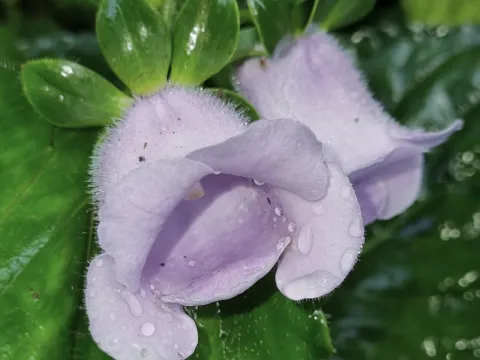
Gloxinia
Gloxinia
Propagation of gloxinia by seeds is usually planned for late winter or early spring, most often between February and March. The seeds of the crop are very small, so they are distributed over the surface of the nutrient substrate without deep incorporation into the soil.
What the section contains

Gloxinia
For successful germination, the seeds require a stable temperature range of 22–24 degrees Celsius. Containers with crops must be covered with glass or polyethylene to create a greenhouse effect, maintaining high air humidity.
The first shoots appear 10–14 days after sowing, after which the cover is gradually removed, acclimatizing the seedlings to indoor conditions. Picking of young plants is carried out after the appearance of the second pair of true leaves into separate containers.
An alternative method of propagation is vegetative, using leaf cuttings or tuber division. Cuttings are performed during the active growing season, rooting the leaves in a loose substrate with moderate moisture.
When using the tuber method, it is important to wait for the plant's dormancy phase, when the aerial part dies off completely. A healthy tuber is carefully cut into parts, and the cut areas are treated with crushed charcoal to prevent rot.
Gloxinia, belonging to the Gesneriaceae family, originates from the rocky forests of Brazil, so it is demanding of bright but diffused lighting. Direct sunlight can cause burns on the delicate velvety leaves, which negatively affects the plant's decorative appearance.
The crop prefers loose, slightly acidic soil mixtures with good aeration and drainage properties. The optimal composition of the substrate includes leaf mold, peat, and sand in a proportion that ensures moisture retention without the risk of waterlogging.
The optimal temperature for active growth is 20–22 degrees, but the plant is extremely sensitive to sudden temperature changes and drafts. During the budding period, it is necessary to maintain stable conditions to prevent the flower buds from dropping.
Watering should be careful and regular, preferably using the bottom method via a saucer so that water does not fall on the leaves and growth point. Excess moisture around the tuber is the main cause of fungal infections and plant death.
During the autumn decrease in daylight hours, gloxinia gradually enters a dormancy phase, slowing down its metabolism. At this time, watering is reduced, and after the aerial part dies, the tubers are stored in a dry, cool place at a temperature of about 12–15 degrees.
The most dangerous disease of gloxinia is gray mold, which manifests as brown spots on the leaves with excess moisture. To fight it, it is necessary to immediately remove the affected parts and treat the plant with systemic fungicides.
Powdery mildew often affects the crop when ventilation is poor, manifesting as a white powdery coating. An effective method of control is the use of sulfur-based preparations or specialized biological fungicides.
Among pests, thrips and spider mites are most often found on gloxinia, which suck juices from young shoots and leaves. Their presence can be noticed by the deformation of leaf blades and the appearance of small light dots on the surface of the tissues.
Root rot, caused by an improper watering regime, quickly leads to the death of the tuber, so prevention consists of monitoring soil moisture. The use of high-quality drainage is a mandatory condition when growing this plant.
To prevent pest infestation, regular visual inspection of plants and quarantine for new specimens in the collection are recommended. If the first signs of infestation are detected, insecticides or acaricides are applied according to the instructions.