
Haberlea ferdinandi-coburgii
Haberlea ferdinandi-coburgii
Description
Growing requirements
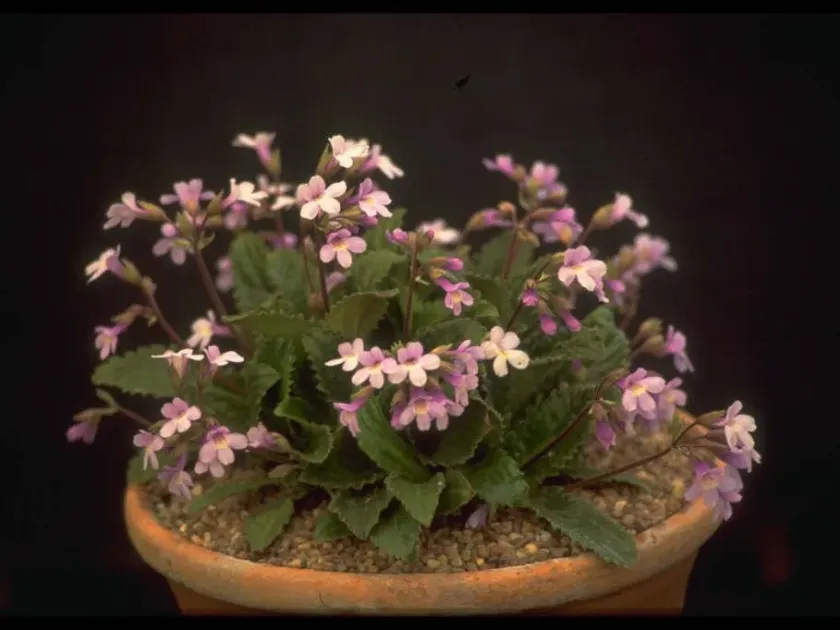
Haberlea ferdinandi-coburgii is a unique relict species belonging to the Gesneriaceae family, often referred to as a living fossil of European flora. Naturally, this plant thrives on rocky outcrops in Bulgaria and Greece, typically inhabiting shaded northern mountain slopes.
Botanically, it is a perennial rosette-forming plant known for its remarkable poikilohydric ability. It can survive prolonged periods of extreme drought by entering a state of dormancy, quickly regaining turgor and metabolic activity once moisture becomes available again.
Successful cultivation requires environmental conditions that mimic its natural habitat, emphasizing high air humidity and protection from direct sunlight. In horticultural practice, it is primarily used in specialized rock gardens, alpine houses, or terrariums.
The growing medium must be well-drained and rich in organic matter while maintaining a slightly acidic to neutral pH. Substrates based on leaf mold, peat, and crushed limestone are ideal, as they provide sufficient moisture retention without risking root rot at the crown.
The species is extremely sensitive to water quality, specifically mineral salt accumulation. Therefore, it is strongly advised to use only rainwater or distilled water for irrigation. Stable, moderate temperatures are essential, making it a challenging species for conventional agricultural production.
Main diseases and pests
The primary threat to Haberlea ferdinandi-coburgii is root rot caused by inadequate drainage or waterlogged conditions, particularly during the dormant winter period. Excess moisture combined with poor ventilation frequently triggers the development of grey mold (Botrytis).
Pests rarely infest this species in outdoor settings, but under greenhouse conditions or poor sanitation, the plant may become susceptible to spider mites and thrips. Preventive care involves regular monitoring of the foliage and ensuring proper air circulation around the plants.