
Fagraea ceilanica
Fagraea ceilanica Thunb.
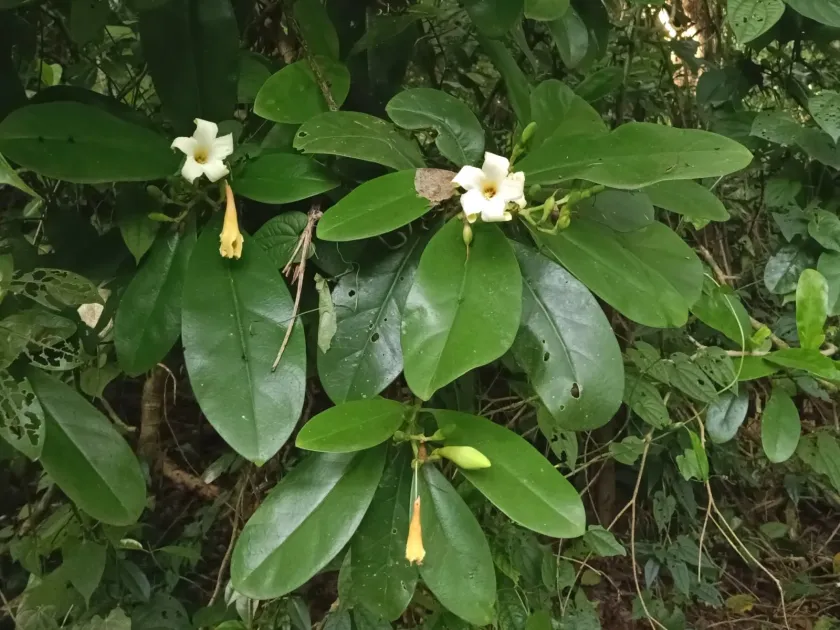
Description
Growing requirements
Fagraea ceilanica is an evergreen shrub or tree belonging to the family Gentianaceae. In its natural habitat, it often displays epiphytic characteristics, growing on the trunks of other trees, which is a common adaptation in tropical forest ecosystems.
Native to tropical regions of South and Southeast Asia, including Sri Lanka and India, the species thrives in humid forest environments. It requires a climate that remains warm throughout the year, with high levels of humidity and protection from cold winds.
For cultivation, the plant requires fertile, well-draining soil that mimics the organic-rich environment of a forest floor. Maintaining a slightly acidic to neutral pH level is essential for optimal nutrient uptake and root development.
The plant thrives in bright, indirect light conditions. While it can handle some dappled sunlight, direct exposure during the hottest parts of the day should be avoided to prevent leaf scorch, especially in container-grown specimens.
Economically, Fagraea ceilanica is prized for its ornamental value. It produces large, waxy, and highly fragrant flowers that are particularly attractive in evening landscapes, making it a desirable species for botanical gardens and luxury landscaping projects.
Main diseases and pests
The primary threat to the health of Fagraea ceilanica is root rot, typically caused by waterlogged soil conditions. Ensuring that the planting site or container has excellent drainage is critical to preventing fungal pathogens from attacking the root system.
Common pests include scale insects and mealybugs, which tend to infest the undersides of leaves and leaf axils. These pests weaken the plant by feeding on sap and can cause premature leaf drop if not managed promptly through mechanical or chemical intervention.
Spider mites are a significant concern in controlled environments like greenhouses where air circulation might be limited. Low humidity levels significantly increase the susceptibility of the plant to mite infestations, necessitating regular misting.
Fungal leaf spots can occur when foliage remains wet for extended periods in poorly ventilated areas. Preventive care involves maintaining good spacing between plants and avoiding overhead irrigation during the late evening hours.
Regular monitoring of the canopy and root zone health is essential for successful maintenance. Integrated pest management, focusing on early detection and appropriate horticultural practices, is the most effective way to protect this delicate species from damage.