
Houseleek
Sempervivum L.
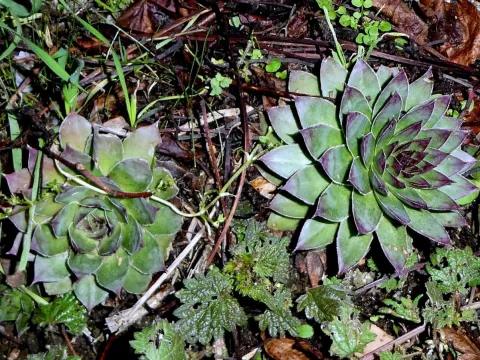
Houseleek (Sempervivum L.) is a member of the Crassulaceae family. It is a perennial succulent plant known for its thick, fleshy leaves arranged in tight, symmetrical rosettes that store water, allowing the plant to thrive in harsh environments.
What the section contains


Houseleek
Originating from mountainous regions across Europe, Asia, and North Africa, houseleek is naturally adapted to rocky crevices and nutrient-poor, sandy soils. This species is highly hardy, capable of surviving extreme temperature fluctuations and long-term droughts, making it a staple for rock gardens.
For successful cultivation, Sempervivum requires well-drained soil with a neutral or slightly alkaline pH. Proper drainage is critical; the plant will quickly succumb to root rot if grown in heavy, compacted, or waterlogged soil, emphasizing the need for sandy or gravelly growing media.
The plant is heliophilic, meaning it thrives in full sun, which is necessary to maintain the vibrant leaf coloration and compact, dense rosette structure. While it can tolerate partial shade, insufficient light often results in stretched, spindly leaves and poor plant development.
Maintenance is straightforward and requires minimal intervention. Key tasks include removing weeds and pruning dead, monocarpic rosettes that have finished blooming. The plant propagates easily through offsets, often called chicks, which form around the parent plant, known as the hen.
The primary threat to houseleek is root rot, caused by excessive soil moisture and poor drainage. This condition is essentially a physiological response to overwatering rather than a pathogen-driven infection, though it often leads to secondary bacterial decay.
Fungal infections, such as leaf spot, can occur in environments with high humidity and poor air circulation. To mitigate this risk, it is important to ensure adequate spacing between plants and avoid overhead watering that keeps the rosettes damp for prolonged periods.
Pests such as mealybugs and root aphids can infest the plants, particularly in greenhouse or indoor environments. These insects thrive in dry, warm conditions and can weaken the plants by extracting cell sap, requiring careful inspection and application of horticultural oils or insecticidal soap.
Slugs and snails occasionally feed on the fleshy leaves, especially during rainy spring weather. Physical barriers like crushed eggshells or gravel mulch are commonly used by gardeners to protect the foliage from these gastropods without the need for toxic chemicals.
Effective management includes maintaining a clean growing area and ensuring the plants are not overcrowded. Regular monitoring allows for the early detection of pests and diseases, ensuring the long-term health and aesthetic quality of the houseleek collection.