
Rock houseleek
Sempervivum xrupicola A. Kern.
Description
Growing requirements
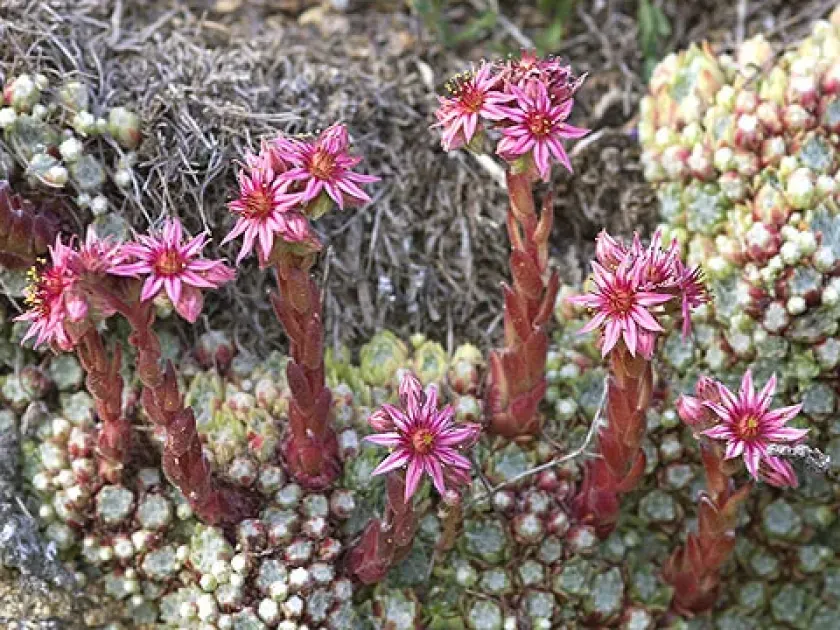
Rock houseleek is a perennial succulent plant belonging to the Crassulaceae family, naturally found in rocky, high-altitude habitats across Europe.
The plant grows in dense, succulent rosettes that store water within their fleshy leaves, a structural adaptation that enables it to thrive in arid and nutrient-poor environments.
For cultivation purposes, it requires a well-draining, gravelly soil medium and full sun exposure to maintain its compact growth form and vibrant leaf color.
It exhibits remarkable hardiness against extreme weather fluctuations, remaining green and resilient even throughout harsh winters without special protection.
In landscaping, this species is highly valued for its aesthetic contribution to rock gardens, living walls, and xeriscaping projects, requiring virtually no irrigation once established.
Main diseases and pests
The primary threat to the health of rock houseleek is the development of root rot, typically caused by waterlogged soil conditions and high humidity levels.
Fungal infections can quickly compromise the integrity of the succulent rosettes, particularly when air circulation around the plants is insufficient.
Pests such as mealybugs and aphids may occasionally infest the plants, particularly during periods of environmental stress, impacting both aesthetic and biological vitality.
To maintain a healthy crop, growers should prioritize impeccable drainage and avoid overhead watering that might trap moisture between the dense leaves.
Management strategies involve keeping the planting site free of organic debris and monitoring for any signs of decay, which allows for prompt remedial action to protect the surrounding plants.