
Common houseleek
Sempervivum tectorum L.
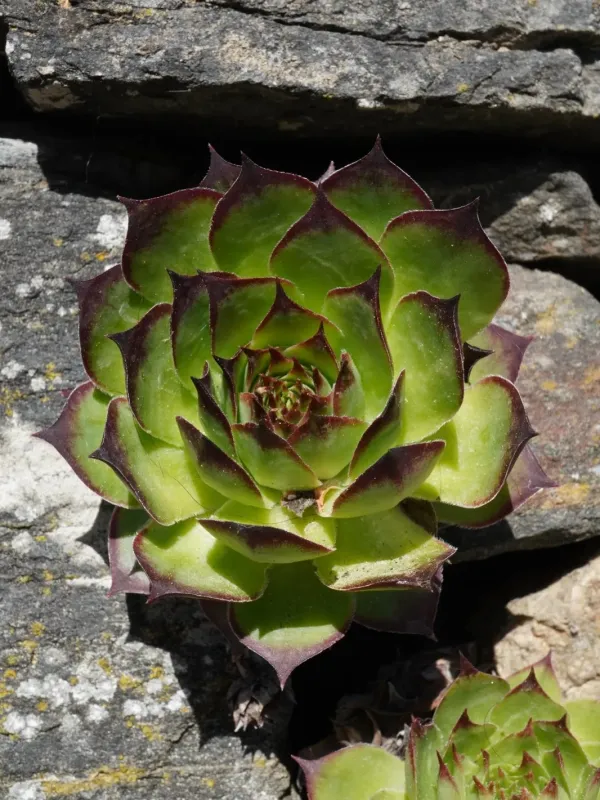
Description
Sowing dates
Propagation of Sempervivum tectorum is primarily achieved through vegetative means by separating the offshoots or "chicks" that form on the runners. The ideal time for this process is during spring or early summer when the plant is in its active growth phase.
Seed propagation is less common and requires specific conditions, as the seeds are extremely small. They are sown in a light, sandy substrate under glass, maintaining consistent moisture and a temperature of approximately 20 degrees Celsius.
When planting the rosettes, it is important to maintain a spacing of 10 to 20 centimeters between plants, depending on the variety. This provides sufficient room for the formation of new offsets in subsequent seasons.
The houseleek adapts well to transplanting and can be planted in open ground throughout the warm season. The key to successful establishment is avoiding excessive moisture during the first few weeks after planting.
To accelerate the growth of young plants, it is recommended to use moderately fertile soil with added compost, which stimulates root system development without promoting succulent rot.
Growing requirements
Sempervivum tectorum belongs to the Crassulaceae family and is a highly decorative perennial succulent. It possesses the ability to store moisture in its fleshy leaves, making it extremely resistant to arid conditions.
The plant prefers open, well-lit areas. In shade, the decorative appeal of the rosette decreases, leaves become loose, and the plant loses its characteristic compact shape and vibrant color.
The houseleek is undemanding regarding soil conditions, but excellent drainage is critical. Waterlogging is fatal to this species and inevitably leads to root rot and decay of the rosette base.
This crop is ideal for rock gardens, alpine slides, and container gardening. Due to its ability to grow in narrow crevices, it was traditionally planted on rooftops, which is the source of its name.
The plant is highly winter-hardy and does not require special cover in temperate climates. It can withstand significant temperature fluctuations, maintaining vitality even when the soil freezes.
Yield
The commercial and practical use of Sempervivum tectorum encompasses decorative horticulture and phytotherapy. It is highly valued as a groundcover capable of creating dense mats on poor and dry soil.
In folk medicine, the leaves of the plant are utilized for their anti-inflammatory, wound-healing, and antiseptic properties. Extracts, juices, and infusions are commonly prepared for topical applications.
In landscaping, the common houseleek is indispensable for creating dry streams, terraces, and vertical gardens. It is economically efficient due to minimal maintenance requirements and high viability.
The productivity of a houseleek plantation is measured not by weight, but by the quantity of quality planting material — the rosettes. Under proper agronomic practices, one mother plant can produce up to 5-10 offsets per season.
Mass cultivation can be directed toward supplying decorative material for private nurseries. Market demand for this plant is consistently high due to its extreme longevity and low-maintenance nature.
Main diseases and pests
The primary threat to the houseleek is excessive soil moisture, which triggers root rot. Upon detecting symptoms, it is necessary to remove affected parts and improve soil drainage immediately.
Among pests, root mealybugs and aphids pose the greatest danger, as they can settle in the leaf axils. Systemic insecticides should be applied only if clear signs of infestation are present.
The plant may occasionally suffer from fungal diseases resulting from poor air circulation and high humidity. Proper planting spacing and airflow are the best preventative measures.
Birds can sometimes damage young rosettes by pulling them from the soil, which may necessitate the use of protective netting during the establishment phase.
Weeds are serious competitors for the houseleek, especially in the early stages of development. Regular weeding is mandatory to prevent the crop from being suppressed by more aggressive weed species.