
Hairy houseleek
Sempervivum piliferum
Description
Growing requirements
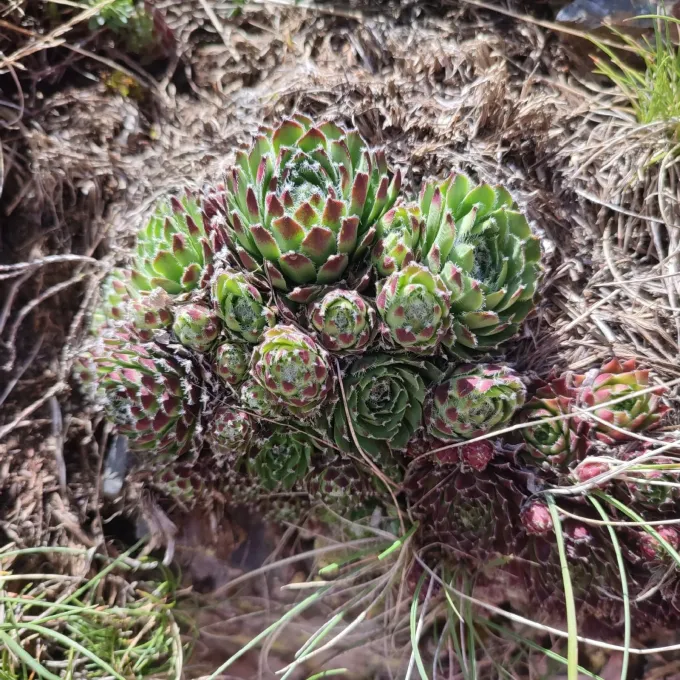
The Hairy houseleek (Sempervivum piliferum) belongs to the Crassulaceae family. It is a succulent perennial plant characterized by its dense rosettes of leaves fringed with soft, hair-like cilia, which serve to protect the leaf margins.
Native to European mountain ranges, this species thrives in crevices and rocky soils. Its evolutionary history has made it highly resistant to harsh conditions, including poor nutrient availability and intense exposure to sunlight.
For cultivation purposes, Sempervivum piliferum requires full sun to maintain its compact form and vibrant leaf coloration. Insufficient light results in etiolated growth, which makes the plant look weak and less ornamental.
The substrate must be exceptionally well-draining. Cultivators typically use a mixture of gritty sand, gravel, and organic matter in a 3:1 ratio to ensure that no water sits around the roots, as this is the primary cause of plant failure.
The plant is extremely cold-hardy, surviving freezing temperatures effectively. In agricultural or horticultural settings, it requires minimal maintenance, being a perfect candidate for xeriscaping due to its low water requirements.
Main diseases and pests
Root rot is the most significant threat to the Hairy houseleek, usually caused by overwatering or poor drainage. Once the roots begin to decay, the entire rosette often succumbs quickly to fungal pathogens.
Mealybugs are the most common insect pests that infest the rosettes. Because they thrive in the gaps between leaves and among the fine hairs, they are difficult to spot until the plant shows clear signs of wilting or color change.
Aphids can be problematic during the blooming season, specifically attacking the succulent flower stalks. These pests drain the plant's resources, which can inhibit the successful production of seeds or the formation of offset daughter rosettes.
Slugs and snails often graze on the fleshy leaves during damp spring weather. Implementing physical barriers, such as copper tape or crushed eggshells, is an effective, environmentally friendly way to protect the crop in garden settings.
To maintain plant health, it is essential to ensure adequate airflow. Stagnant air around the rosettes, combined with high humidity, encourages the growth of various molds and mildew species, potentially devastating a collection.