
Cobweb houseleek
Sempervivum arachnoideum L.
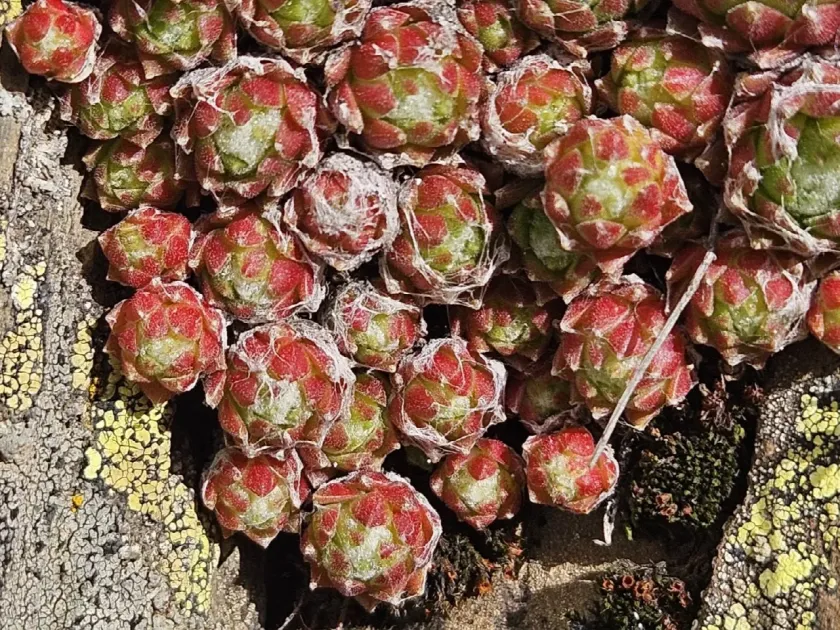
Description
Sowing dates
Sowing seeds of the Cobweb houseleek is typically carried out in late winter or early spring, usually between February and March. For optimal results, seeds are sown superficially, pressed lightly into the substrate, as they require light to germinate effectively.
The ideal temperature for germination ranges between +20 and +25 degrees Celsius. Containers must be covered with plastic or glass to maintain high air humidity and a greenhouse effect until the first sprouts emerge from the soil surface.
Vegetative propagation using offsets, or "chicks," is the most practical and efficient method for growers. This process can be performed throughout the active growing season, starting from early spring and continuing until the end of summer.
Once seedlings develop at least two or three true leaves, they should be pricked out into individual small pots or directly into a prepared rock garden site. The plant demonstrates high survival rates after transplanting if the root ball remains undisturbed.
Acclimatization of young plants is a crucial step before final placement in open ground. Gradually exposing plants to natural light and temperature fluctuations over two weeks significantly enhances their long-term resilience and health.
Growing requirements
The Cobweb houseleek belongs to the Crassulaceae family and naturally inhabits rocky slopes and mountainous regions. The plant is exceptionally well-adapted to poor, stony soils with excellent drainage, which is fundamental for its survival in harsh environments.
The species prefers sun-exposed locations, as lack of light causes the rosettes to lose their density and characteristic silvery web-like hairs. Sufficient sunlight stimulates the production of anthocyanins, leading to more vibrant and intense leaf coloration.
The most important requirement for growth is the absence of standing water. Loose, neutral, or slightly acidic substrates mixed with gravel or sand are ideal. Heavy clay soils must be structurally improved with drainage components to prevent root damage.
This species is highly cold-hardy and can successfully overwinter in open ground. However, in regions with snowless winters and strong winds, mulching with fine gravel is recommended to protect the root system from desiccation and freezing.
Watering should be minimal and applied strictly to the soil base. Avoiding moisture in the center of the rosette is crucial, as standing water in leaf axils promotes fungal infections and rot, especially during cooler periods with lower evaporation.
Main diseases and pests
The primary threat to the crop is root rot, which occurs due to waterlogged conditions or poor drainage. If symptoms of tissue softening are observed, the infected plants must be removed promptly, and the substrate should be allowed to dry out completely.
Pests rarely attack the Cobweb houseleek, though aphids may appear under stressful growing conditions. These insects sap energy from the leaves, leaving the plant vulnerable to secondary infections; systemic insecticides can be used if infestation is severe.
In some cases, soil nematodes can damage the root system. Prevention is the best defense, which includes using sterilized substrates and ensuring that all new planting material is healthy and free from soil-borne pathogens before introduction.
Slugs and snails can cause significant damage to the fleshy leaves during wet weather. Protecting the planting area with snail bait or creating barriers of abrasive materials like wood ash or crushed gravel around the rosettes is highly effective.
Fungal rust may manifest as rusty spots on the foliage. To prevent disease spread, it is essential to maintain proper spacing between rosettes, which facilitates air circulation and helps keep leaf surfaces dry after rain or heavy dew.