
Hairy stonecrop
Sedum hirsutum
Description
Growing requirements
Hairy stonecrop (Sedum hirsutum) is a perennial succulent species belonging to the Crassulaceae family. Native to the western Mediterranean, particularly the Iberian Peninsula and parts of North Africa, this plant is naturally adapted to thriving in rock crevices and on stony, nutrient-poor slopes.
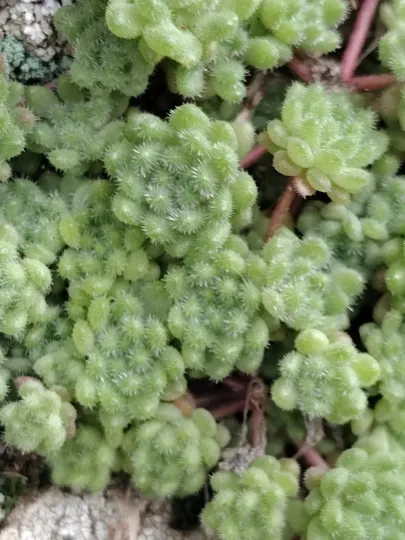
The botanical profile of this species is defined by its small, fleshy leaves that are covered in fine, glandular hairs. These hairs serve as a protective adaptation, helping the plant to reduce water loss through transpiration and protecting it from excessive heat in its native, sun-drenched habitats.
Regarding climatic requirements, this plant is a true xerophyte. It requires maximum exposure to natural sunlight to maintain its compact, dense growth form. Cultivation in areas with low light levels will result in weak, spindly stems, which significantly degrades the aesthetic value of the plant.
Soil quality is a critical factor for the successful cultivation of this stonecrop. It demands a highly porous, gritty, and mineral-rich substrate. Standard potting soils are unsuitable, and the cultivation medium must include a significant percentage of perlite, pumice, or sharp horticultural grit to ensure rapid water drainage.
General management involves very limited maintenance, typical of succulent gardening. Watering should be carried out only when the substrate has completely dried out, especially during the dormant winter months when excess moisture is the primary cause of plant mortality.
Main diseases and pests
The primary threats to Sedum hirsutum are fungal pathogens such as Pythium and Phytophthora, which flourish in waterlogged conditions. Pests such as mealybugs may also infest the foliage, particularly if plants are grown in confined or poorly ventilated conditions.