
Sempervivum marmoreum
Sempervivum marmoreum x Sempervivum tectorum
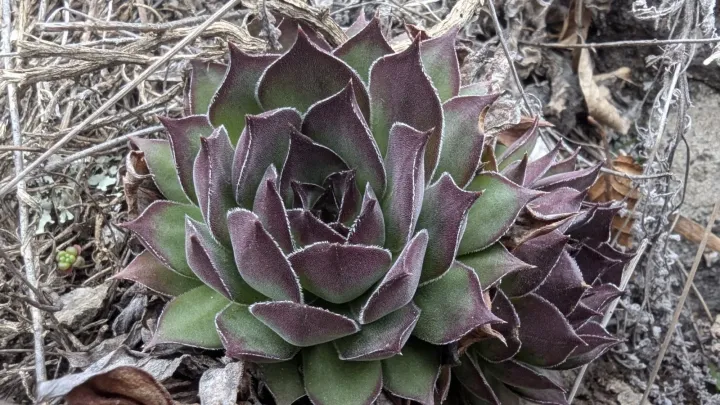
Description
Growing requirements
Sempervivum marmoreum belongs to the Crassulaceae family and is a popular succulent widely used in decorative horticulture and rock gardens.
Originating from the mountains of Central and Southeastern Europe, this plant is characterized by its rosettes of fleshy leaves that display a distinct marbled pattern, especially when exposed to direct sunlight.
It thrives in poor, rocky, or sandy soils where other plants fail to survive. The most critical requirement for successful cultivation is excellent drainage, as the roots are highly susceptible to rot.
The agrotechnics for this crop are relatively simple: minimal irrigation is required after establishment, and fertilization should be avoided to maintain the plant's natural compact shape and cold resistance.
The plant is highly resilient and serves as a vital component in erosion control for slopes and in xeriscaping projects due to its extreme drought tolerance.
Main diseases and pests
The most common disease affecting Sempervivum marmoreum is root and crown rot, typically triggered by stagnant water or excessively high humidity levels.
Pest pressure often comes from root aphids or mealybugs, which settle at the base of the leaves and extract essential fluids, leading to stunted growth.
Vine weevils are another significant threat, as their larvae can consume the root system, causing the entire rosette to detach from the soil.
Cultural control, such as ensuring proper spacing between rosettes and using grit-based soil mixtures, remains the best method for pest and disease prevention.
In cases of severe infestation, targeted application of appropriate systemic insecticides or fungicides is necessary to save the planting area.