
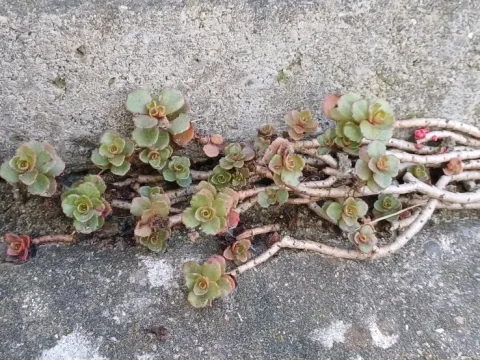
Phedimus
Phedimus Raf.
Propagation of Phedimus in agricultural settings is primarily performed through vegetative methods, ensuring rapid establishment and uniformity of the crop.
What the section contains
 Aizoon stonecrop
Phedimus aizoon (L.) 't Hart
Aizoon stonecrop
Phedimus aizoon (L.) 't Hart
 Caucasian stonecrop
Phedimus spurius (M. Bieb.) 't Hart
Caucasian stonecrop
Phedimus spurius (M. Bieb.) 't Hart
 Hybrid sedum
Phedimus hybridus (L.) 't Hart
Hybrid sedum
Phedimus hybridus (L.) 't Hart
 Kamchatka stonecrop
Phedimus kamtschaticus (Fisch.) 't Hart
Kamchatka stonecrop
Phedimus kamtschaticus (Fisch.) 't Hart
 Middendorff's stonecrop
Phedimus middendorffianus (Maxim.) 't Hart
Middendorff's stonecrop
Phedimus middendorffianus (Maxim.) 't Hart
 Phedimus takesimensis
 (Nakai) ’t Hart
Phedimus takesimensis
Phedimus takesimensis (Nakai) ’t Hart
Phedimus
The most favorable window for dividing mature plants or taking cuttings is during the early spring or autumn, avoiding the extreme heat of midsummer.
When seed propagation is required, it must be performed in controlled greenhouse environments using a well-draining, sandy-based growing medium.
Seeds should be sown on the surface of the soil with minimal covering, as they require light exposure to trigger the germination process effectively.
Regular misting and adequate ventilation are essential during the seedling stage to maintain moderate humidity without creating an environment conducive to damping-off.
Phedimus belongs to the Crassulaceae family and is recognized for its exceptional resilience and ability to thrive in poor, rocky, or sandy soil profiles.
The crop demands excellent drainage, as excessive moisture is the primary factor limiting the successful cultivation of these succulent species in heavy clay soils.
Full sun exposure is critical for the development of the plant; reduced lighting leads to etiolation, where stems become weak and the plant loses its natural hardiness.
Drought tolerance is a hallmark of Phedimus, allowing it to survive periods of limited rainfall by storing water within its thickened leaves and stems.
Maintenance involves minimal intervention, though periodic weeding is necessary in the first year to prevent competition from more aggressive local plant species.
Fungal diseases are the most prevalent threat to Phedimus, particularly root rot, which is triggered by saturated soil conditions and poor atmospheric circulation.
Monitoring for pests such as aphids and mealybugs is necessary, as these insects can significantly damage the plant by extracting fluids from its succulent tissues.
In addition to biological threats, improper soil pH can cause nutrient imbalances, leading to chlorosis or a reduction in the plant's overall growth rate.
Integrated pest management strategies are recommended, focusing on maintaining dry soil surfaces and ensuring that spacing between plants allows for adequate airflow.
If chemical intervention is unavoidable, targeted insecticides and fungicides must be used with caution to avoid damaging the delicate surface structures of the succulent leaves.
For medicinal or horticultural applications, the harvesting of Phedimus typically focuses on the collection of the vegetative mass during the peak growth season.
When collecting for pharmacological use, the aerial parts are harvested just before or during the initial flowering stage to ensure the highest concentration of phytochemicals.
Post-harvest processing requires rapid drying in a shaded, well-ventilated area to prevent degradation of the volatile organic compounds found within the plant.
Horticultural harvesting involves regular pruning to keep the ground cover dense and healthy, which also serves to remove dead material that could attract pathogens.
When extracting root material for nursery stock, plants should be carefully lifted in the autumn, ensuring minimal root damage to promote successful regrowth upon transplantation.