
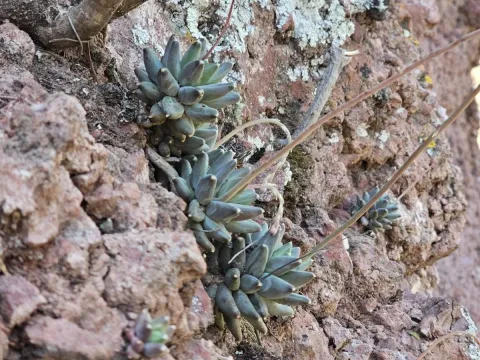
Pachyphytum
Pachyphytum
Pachyphytum is a genus of succulent plants belonging to the Crassulaceae family. Originating from the mountainous regions of Mexico, these plants have evolved to survive in challenging environments with high solar radiation and low soil moisture.
What the section contains


Pachyphytum
The primary botanical characteristic of Pachyphytum is its thick, fleshy leaves, which often possess a glaucous, waxy bloom that protects the plant from intense sun and limits transpiration.
Proper cultivation requires full sun exposure to maintain the plant's compact, rosetted growth habit. Inadequate lighting results in etiolation, where the stem stretches and loses its structural integrity.
Temperature management is crucial, as the plant prefers warm days and cooler nights, mimicking its natural habitat. During the winter, it requires a dormant period with cooler temperatures and minimal water.
Soil composition must be highly inorganic to ensure rapid drainage. A mix of pumice, coarse sand, and a small amount of peat or succulent potting soil is the industry standard for optimal development.
The most common cause of failure in Pachyphytum cultivation is root rot caused by stagnant water in the substrate, which suffocates the root system and leads to rapid decay of the plant tissues.
Mealybugs are the most frequent pest encountered in the greenhouse and indoor cultivation. They often reside in the leaf axils, where they feed on plant sap and secrete honeydew, which can promote sooty mold.
Aphids and spider mites may also affect the plant, particularly if it is grown in environments with poor air circulation and low humidity, causing visible stress and leaf deformities.
Integrated pest management suggests using biological controls or mild systemic insecticides, applied with caution to avoid washing off the delicate waxy bloom that defines the plant's aesthetic appeal.
Preventative maintenance includes keeping the soil surface dry, removing dead leaves from the base of the plant to eliminate hiding spots for pests, and ensuring adequate spacing between individual plants.