
Middendorff's stonecrop
Phedimus middendorffianus (Maxim.) 't Hart
Description
Growing requirements
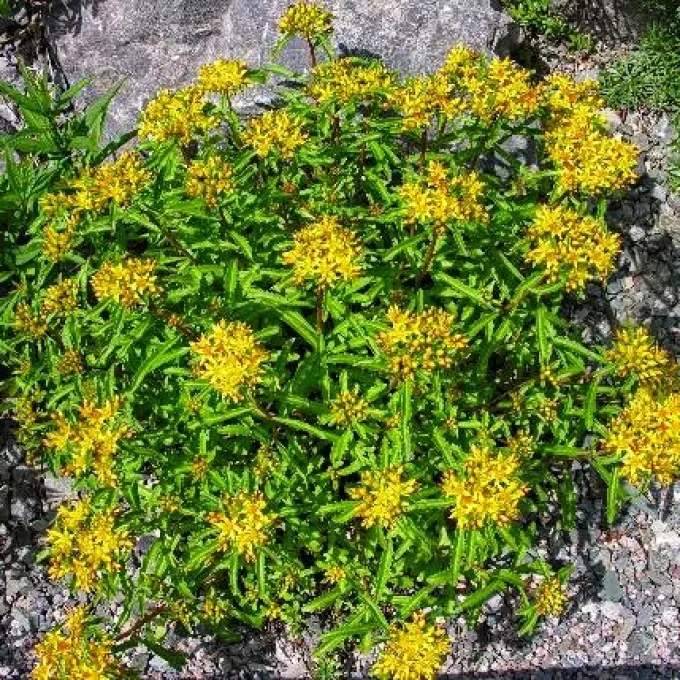
Middendorff's stonecrop (Phedimus middendorffianus) is a perennial succulent belonging to the Crassulaceae family. It is recognized for its creeping growth habit and attractive foliage that changes color during the season.
This species is native to East Asia, including regions in Russia, China, and Japan. It typically inhabits rocky slopes and alpine meadows, showcasing its natural ability to thrive in challenging, nutrient-poor substrates.
The plant requires well-draining soil and full sun exposure to maintain its compact shape and vibrant color. It performs best in sandy or rocky environments where moisture does not accumulate near the root zone.
It displays excellent cold hardiness, making it a reliable choice for temperate climate landscaping. The plant is highly drought-tolerant, utilizing its succulent tissues to store water during arid conditions.
Cultivation practices focus on site preparation with adequate drainage and initial weed control. Once established, the plants require minimal intervention, making them ideal for low-maintenance garden projects.
Main diseases and pests
Middendorff's stonecrop is generally resistant to most pests and diseases. The most significant threat is root rot caused by poor soil drainage and waterlogged conditions, which can be fatal to the plant.
Minor infestations of aphids or beetles may occur on young shoots. Effective control involves maintaining proper airflow and avoiding overcrowding, which helps prevent pest colonization and fungal outbreaks.