
Pale stonecrop
Petrosedum ochroleucum
Description
Growing requirements
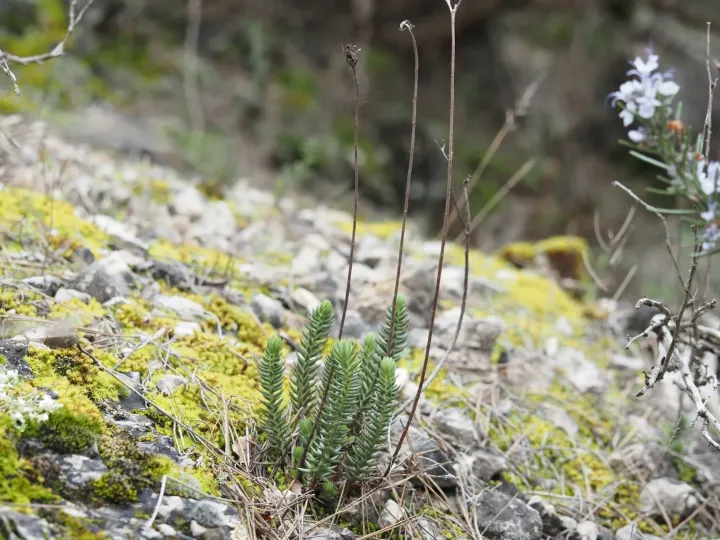
Pale stonecrop (Petrosedum ochroleucum) is a perennial herbaceous plant belonging to the Crassulaceae family. This species is a true succulent, well-adapted to environments where water availability is periodic or limited.
The native range of this plant includes Mediterranean regions and parts of Central Europe. It typically inhabits rocky slopes, limestone crags, and gravelly grasslands, reflecting its high tolerance for nutrient-poor and gritty substrates.
This crop requires full sun exposure to thrive and maintain its structural integrity. In terms of soil, it demands excellent drainage, as it is highly susceptible to root rot if placed in damp or waterlogged conditions. It performs best in poor, sandy, or rocky soils.
Botanically, it features fleshy leaves that are closely packed along the stems. During the flowering season, the plant produces distinctive pale yellow star-shaped flowers organized in corymbose inflorescences, which attract various pollinators.
Management of this culture is relatively simple, as it requires little in terms of fertilization or irrigation. The key to successful cultivation is imitating its natural rocky habitat. Once established, it acts as a low-maintenance groundcover that suppresses weeds and survives harsh dry spells.
Main diseases and pests
The primary threats to this species are fungal infections associated with improper moisture control. Specifically, Pythium or Phytophthora root rots can develop quickly if the soil lacks proper aeration and drainage.
Aphids and mealybugs are the most common insect pests that attack the plant. They tend to cluster around the growing tips, sucking sap and weakening the succulent stems, which can lead to stunted growth and yellowing of the leaves.
Gastropods such as slugs and snails are significant pests, particularly during the wet spring months. They can consume the soft succulent foliage, leaving behind unsightly holes and mucus trails, which can also act as entry points for bacterial infections.
Preventative measures focus on maintaining good air circulation around the plants and avoiding heavy mulching with organic matter that retains moisture. A layer of grit or decorative gravel is recommended to keep the foliage off damp soil.
If chemical control becomes necessary, use systemic insecticides or molluscicides with caution. Always ensure that the applications are compatible with the sensitive nature of the succulent tissues, as some harsh chemicals can burn the leaves.