
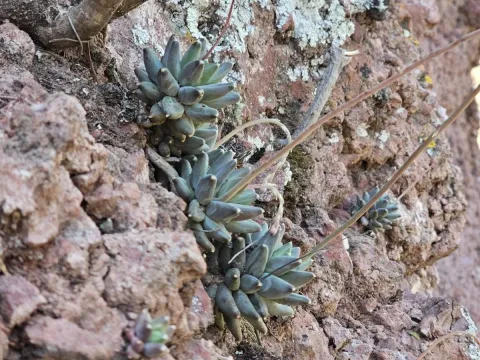
Pachyphytum
Pachyphytum Link et al.
Pachyphytum is a genus of succulent plants within the Crassulaceae family. Native to Mexico, these plants are primarily found in high-altitude rocky regions, where they have evolved to store water in their fleshy leaves to survive extended dry periods.
What the section contains
 Pachyphytum bracteosum
 Klotzsch
Pachyphytum bracteosum hookeri
Pachyphytum bracteosum Klotzsch x Pachyphytum hookeri
Pachyphytum bracteosum
Pachyphytum bracteosum Klotzsch
Pachyphytum bracteosum hookeri
Pachyphytum bracteosum Klotzsch x Pachyphytum hookeri
 Pachyphytum coeruleum
 J. Meyrán
Pachyphytum coeruleum
Pachyphytum coeruleum J. Meyrán
 Pachyphytum glutinicaule
 Moran
Pachyphytum glutinicaule
Pachyphytum glutinicaule Moran
 Pachyphytum hookeri
 (Salm-Dyck) A. Berger
Pachyphytum hookeri x P. glutinicaule
Pachyphytum hookeri (Salm-Dyck) A. Berger x P. glutinicaule Moran
Pachyphytum hookeri
Pachyphytum hookeri (Salm-Dyck) A. Berger
Pachyphytum hookeri x P. glutinicaule
Pachyphytum hookeri (Salm-Dyck) A. Berger x P. glutinicaule Moran
 Pachyphytum hookeri x Pachyphytum oviferum
Pachyphytum hookeri x Pachyphytum oviferum
Pachyphytum hookeri x Pachyphytum oviferum
 Pachyphytum oviferum
 J. A. Purpus
Pachyphytum oviferum
Pachyphytum oviferum J. A. Purpus
Pachyphytum
The botanical structure of the plant is defined by its thick, often cylindrical or spatulate leaves. Many species feature a glaucous, waxy coating known as 'farina,' which acts as a protective layer against intense ultraviolet radiation and prevents moisture loss.
For successful cultivation, Pachyphytum requires a well-draining mineral-based substrate. Standard potting soils are unsuitable as they retain too much moisture, which can cause the roots to suffocate or rot; a grit-heavy mix is preferred.
Lighting is a critical factor in agricultural production. These plants require full sun or very high-intensity supplemental lighting to maintain their natural coloration and sturdy growth habit; otherwise, the plants become etiolated and lose value.
The temperature range should remain moderate during the growing season. While they can tolerate occasional heat, they are not frost-hardy and must be protected from temperatures below freezing to avoid irreversible cellular damage to the leaves.
Root rot is the most common pathology affecting Pachyphytum, almost always caused by overwatering or poor drainage. Once root tissue begins to decay, the infection often spreads to the stem, necessitating immediate intervention.
Mealybugs are the primary pest concern. These insects hide in the tight crevices between leaves, where they extract sap and leave behind honeydew, which can subsequently attract sooty mold, further damaging the plant's health.
Aphids and spider mites may also appear in dry, poorly ventilated environments. These pests can rapidly colonize new growth, causing leaf deformity and preventing the plant from reaching its full commercial size or quality.
Agricultural hygiene is paramount to prevent disease. Tools used for pruning or leaf propagation should be sterilized, and any fallen leaf litter should be removed promptly to eliminate potential breeding grounds for fungal pathogens.
Chemical control should be applied judiciously. When using pesticides, it is essential to consider the sensitive waxy farina on the leaves, as certain oil-based treatments can permanently mar the aesthetic appearance of the plant.