
Hybrid sedum
Phedimus hybridus (L.) 't Hart
Description
Growing requirements
Hybrid sedum (Phedimus hybridus) is a hardy perennial belonging to the Crassulaceae family. It is native to the mountainous regions of Siberia and Central Asia, naturally inhabiting rocky slopes and open, exposed areas where conditions are harsh.
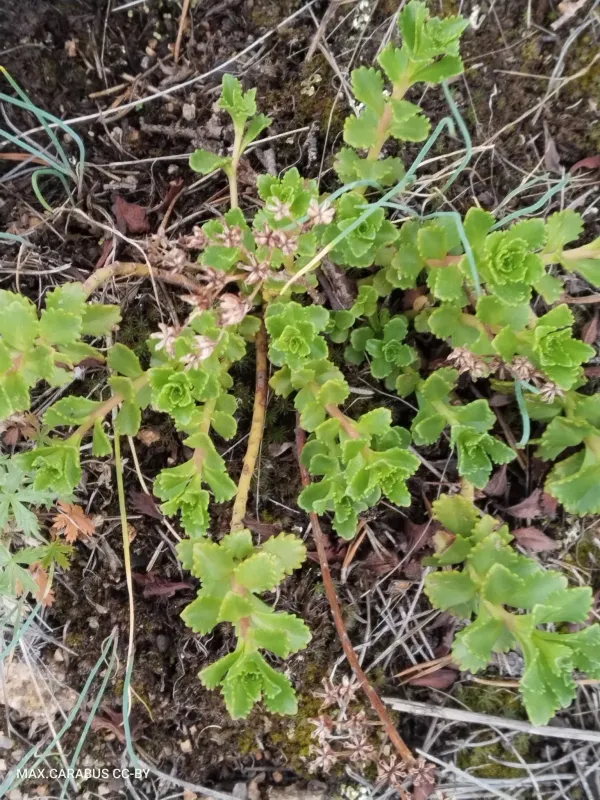
This succulent is characterized by its ability to store water in its fleshy, evergreen leaves. It forms low-growing, mat-like clusters, making it an excellent candidate for erosion control on slopes and for rock gardens where other plants might struggle.
The plant thrives in full sun, which is essential for maintaining its compact habit and promoting vibrant foliage color. While it is highly drought-tolerant, it requires a well-draining soil substrate to prevent root rot during wet periods.
Phedimus hybridus is extremely cold-hardy and can withstand significant freezing temperatures without special protection. It adapts well to nutrient-poor soils, including sandy or stony ground, making it a low-maintenance choice for landscaping.
Cultural care is minimal, consisting mainly of occasional weeding during establishment. Once the plant has formed a dense mat, it effectively suppresses competitive weeds, reducing the need for intensive agricultural intervention.
Main diseases and pests
Phedimus hybridus is generally resistant to pests and diseases, but it remains susceptible to root rots if planted in poorly draining soil. Ensuring proper site selection is the primary method of preventing fungal issues.
Aphids can occasionally infest the tender new growth during the spring season. If the infestation becomes severe, localized treatment with horticultural soaps or mild insecticides can be applied to mitigate the damage.
Slugs and snails may occasionally feed on the leaves during damp weather. Using inorganic mulches, such as crushed stone or gravel, creates an environment that is less attractive to these mollusks and protects the plant.
Caterpillars can cause irregular feeding damage on the leaves. In garden settings, hand-picking is typically sufficient to control the population without resorting to chemicals.
Viral or bacterial infections are uncommon in this species. To maintain overall plant health, avoid over-fertilization, as excessive nitrogen can lead to succulent tissue that is more attractive to pests and less resilient to rot.