
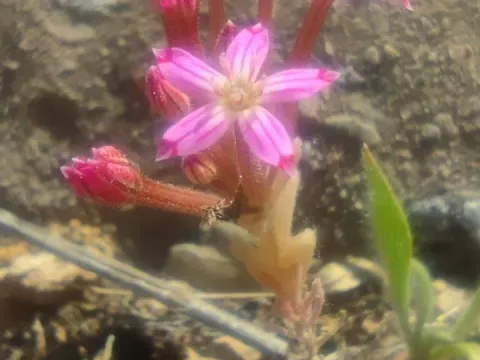
Pistorinia
Pistorinia
Pistorinia is a genus of succulent plants within the Crassulaceae family, known for its small, herbaceous structure adapted to arid environments. These plants are biologically specialized to survive with limited water availability by storing moisture in their succulent leaves.
What the section contains


Pistorinia
Originating from the Mediterranean region, including parts of Northern Africa and Southern Europe, Pistorinia thrives in exposed, rocky, and sandy habitats. Their evolutionary strategy focuses on efficient water usage and low-nutrient tolerance.
In terms of cultivation, the most critical requirement is high drainage capacity. The substrate must be composed mainly of inorganic materials, such as pumice, sand, or grit, to prevent root rot, which is the primary cause of failure in succulent care.
Environmental conditions require intense sunlight throughout the growing season to ensure healthy growth and flowering. Low-light conditions often cause etiolation, where the plant becomes weak and stretches unnaturally to reach for light.
While not a traditional industrial agricultural crop, Pistorinia is valued in the nursery industry and by botanical enthusiasts for xeriscaping. Its use is primarily ornamental, enhancing rock gardens and xerophytic landscape designs.
The primary threats to Pistorinia health include various fungal pathogens that thrive in humid and stagnant conditions. Fungal root rot is the most common and devastating disease for this genus.
Pests such as mealybugs and spider mites are frequent nuisances. These insects often settle in the dense rosette or stem axils, damaging the plant's epidermis and sucking out plant fluids, which weakens the specimen.
Integrated pest management is essential, focusing on maintaining dry foliage and ensuring adequate airflow. Overwatering is the most frequent trigger for both disease and susceptibility to pest attacks.
Chemical control should be applied sparingly, as many succulents are sensitive to the surfactants and solvents found in some commercial pesticides. It is better to use biological control or physical removal for initial infestation stages.
Long-term maintenance of the plant's health is achieved through careful monitoring of soil moisture levels and providing sufficient ventilation, which prevents the build-up of excess humidity that attracts pests and mold.