
Pachyphytum bracteosum
Pachyphytum bracteosum Klotzsch
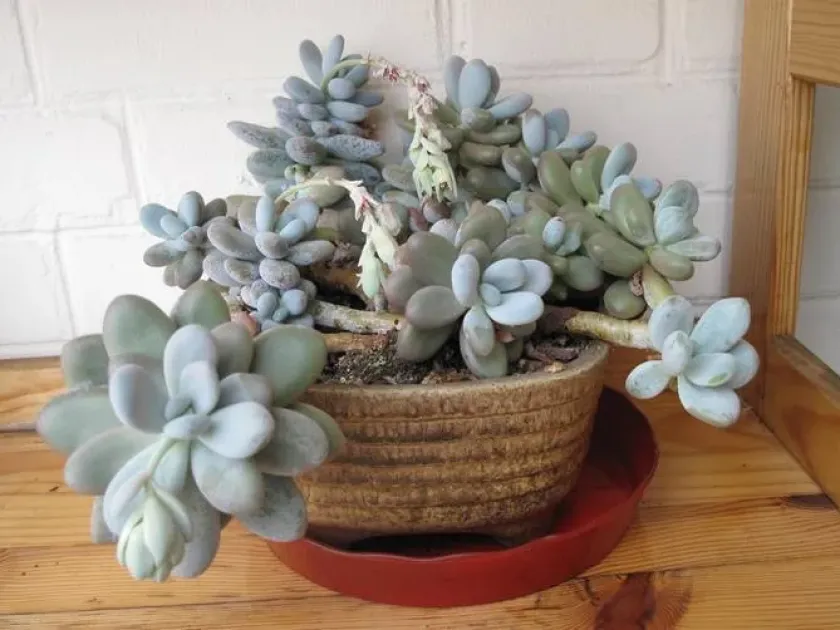
Description
Growing requirements
Pachyphytum bracteosum is a perennial succulent plant belonging to the Crassulaceae family. It is native to the rocky, high-altitude regions of Mexico, where it has evolved to store moisture within its thick, fleshy leaves to withstand periods of drought.
The crop requires bright, direct or filtered sunlight for at least 6 hours a day. Insufficient light levels will cause the plant to etiolate, leading to stretched, weak stems that lose their natural, rosette-like compact structure.
Soil requirements involve a highly porous, inorganic-heavy substrate. A mix of potting soil with a high percentage of pumice, coarse perlite, or sand is essential to prevent water retention and ensure rapid drainage after irrigation.
Watering practices should follow a "soak and dry" method. The substrate must be allowed to dry out completely before the next watering session. During the winter dormancy period, watering should be significantly reduced to prevent rot.
As a horticultural commodity, Pachyphytum bracteosum is primarily cultivated for ornamental purposes in rock gardens, desert-themed displays, and as a popular choice for indoor succulent collections due to its distinctive waxy, glaucous foliage.
Main diseases and pests
The primary threat to this species is root rot caused by poor soil drainage and overwatering. When the roots remain wet for too long, they quickly succumb to pathogens, which can spread to the stem and cause the entire plant to collapse.
Common insect pests include mealybugs and root aphids. Mealybugs typically congregate in the leaf axils, where they feed on sap and secrete honeydew, potentially leading to the development of sooty mold on the leaf surfaces.
Pest management relies on physical removal using a soft brush dipped in alcohol, or the application of systemic insecticides. Care must be taken not to rub off the natural waxy bloom, which acts as a protective shield against intense UV light.
High humidity levels without adequate air circulation can create an environment favorable for fungal leaf spots. Keeping the foliage dry and maintaining good ventilation is critical for preventing these types of infections.
Improper temperature management, specifically exposing the plant to freezing temperatures while the soil is damp, can cause cells to rupture. This damage often appears as black or translucent lesions on the leaves, leading to tissue decay.