
Pachyphytum coeruleum
Pachyphytum coeruleum J. Meyrán
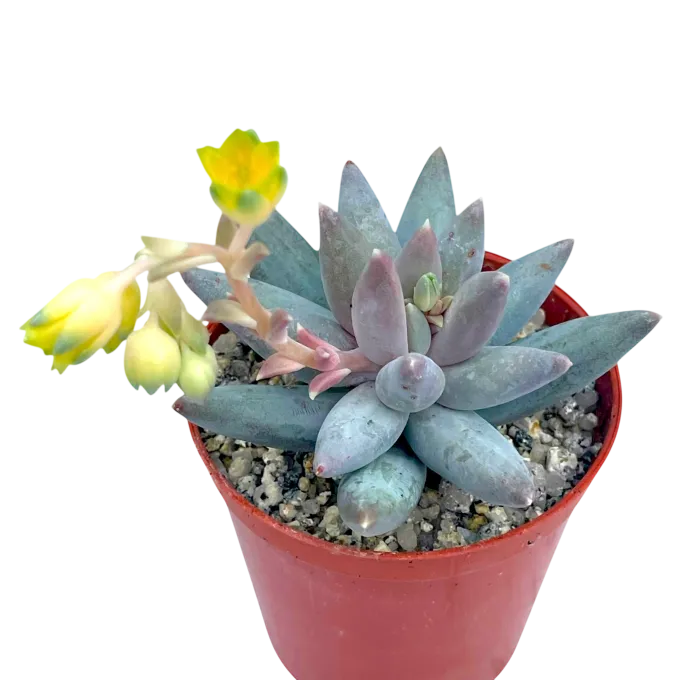
Description
Growing requirements
Pachyphytum coeruleum is a species of succulent plant belonging to the Crassulaceae family. It is highly regarded in ornamental horticulture for its thick, glaucous leaves that feature a distinctive pale blue waxy coating, characteristic of the genus.
The plant originates from the arid mountainous regions of Mexico. This geographical adaptation allows the species to survive in environments with high solar radiation and irregular water availability, which is key to understanding its physiological needs.
Successful cultivation requires high light levels, ideally bright indirect or direct sunlight for several hours a day. Low-light conditions typically result in etiolation, where the plant loses its dense rosette form and the leaves become elongated and pale.
The soil must be highly porous and well-draining. A typical mix includes coarse sand, pumice, or perlite combined with a small amount of potting soil. This structure ensures that oxygen reaches the roots and prevents water saturation.
Temperature management is crucial: the plant thrives in warm summer conditions but requires a cooler, dry winter period (around 10–15 degrees Celsius) to undergo a dormant phase, which is essential for healthy long-term growth.
Main diseases and pests
Root rot is the most significant threat to Pachyphytum coeruleum, usually caused by overwatering or poor drainage. Once rot sets in, the plant can deteriorate rapidly, making prevention through controlled irrigation the most effective management strategy.
Mealybugs are the most common pest infestation. These insects often cluster in the hidden crevices between the leaves, where they extract sap and leave behind honeydew, which can attract secondary fungal infections.
To control pest populations, systemic insecticides applied as a soil drench or direct spray are commonly used. Because the plant has a delicate waxy coating, manual removal of pests with an alcohol-dipped swab is recommended for small infestations.
Fungal pathogens can also affect the leaf surface if water remains trapped in the rosette after watering. Ensuring good air circulation around the plants significantly reduces the risk of fungal proliferation.
Routine inspection of the plant's base and leaf axils is essential for early detection of issues. Maintaining a clean growing environment and providing proper light and airflow are the best preventive measures for sustainable succulent health.