
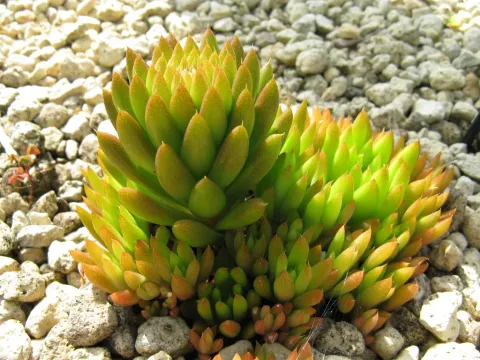
Orostachys
Orostachys Fisch.
Orostachys propagation is primarily achieved through seeds sown on the surface of well-draining, sandy soil mixtures during the early spring season.
What the section contains

Orostachys
Seeds should not be buried, as they require light to germinate effectively; maintaining a consistent but light moisture level is essential for successful germination.
Temperature control during the germination stage is vital, with an ideal range between 18 and 22 degrees Celsius, avoiding excessive heat that could dry out the soil.
Once seedlings have developed several true leaves, they should be transplanted into small pots with gritty substrate to encourage strong, healthy root development.
Vegetative propagation is also highly efficient, involving the careful separation of offset rosettes from the parent plant during the active growth period.
Orostachys is a member of the Crassulaceae family and is recognized for its unique, often biennial or monocarpic life cycle, forming dense, beautiful rosettes.
These plants originate from the rocky terrains and alpine regions of Asia, making them perfectly adapted to arid environments and nutrient-poor, stony soils.
They require full sun exposure to maintain their compact structure; shaded conditions will quickly lead to etiolation, where the plant stretches and loses its natural form.
Soil composition must prioritize drainage above all else, typically comprising coarse sand, gravel, and minimal organic content to prevent moisture retention.
Watering schedules must be strictly regulated: the plant should be allowed to dry out completely between waterings, mimicking the natural precipitation patterns of its native habitat.
Root rot is the most significant threat to Orostachys, almost always caused by waterlogging or soil that does not drain rapidly enough to prevent decay.
Mealybugs are the most common insect pests, often hiding deep within the tight leaf rosettes where they are difficult to treat with topical applications.
Fungal issues, such as powdery mildew, may occur if humidity levels are too high or if the plants are situated in areas with stagnant, humid air.
Over-fertilization can weaken the natural resilience of the plant, making it more susceptible to pests and reducing its ability to survive harsh winter conditions.
Consistent airflow and proper spacing between individual plants are the best preventative measures against both insect infestations and pathogenic fungal growth.