
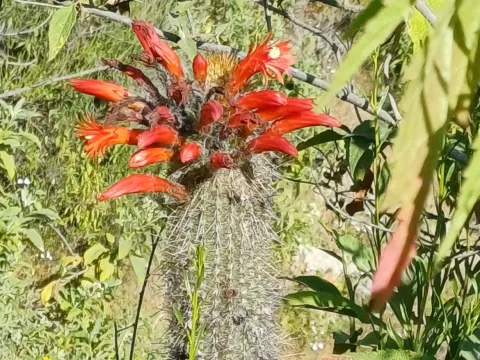
Borzicactus
Borzicactus
Borzicactus is a genus of perennial succulents belonging to the Cactaceae family, native to the arid mountainous regions of Peru and Ecuador. These plants are well-adapted to rocky terrain and extreme fluctuations between daytime heat and nighttime cold.
What the section contains


Borzicactus
The morphology of these cacti is defined by cylindrical or trailing stems equipped with dense, protective spines. A distinctive feature of many Borzicactus species is their zygomorphic flowers, which have evolved to be pollinated by hummingbirds in their native habitats.
Cultivating this species requires intense light conditions to maintain compact growth and healthy spine development. In greenhouse settings, placing the plants in direct sunlight or using supplemental high-intensity discharge lighting is highly recommended.
The growing medium must be highly porous and inorganic. A standard mixture for these cacti involves a combination of coarse sand, perlite, and a small amount of grit, ensuring that water drains away almost immediately after irrigation to prevent root rot.
During the active growing season, watering should be methodical but sparse, following a soak-and-dry cycle. In contrast, the winter dormancy period requires total dryness and cooler temperatures to mimic the natural climate of the Andes and prepare the plant for flowering.
The primary threat to Borzicactus is root rot caused by waterlogged soil, particularly during winter dormancy. If the substrate remains damp for extended periods, the internal tissues of the cactus will break down rapidly, leading to the collapse of the plant.
Spider mites are a persistent problem in warm, dry greenhouse environments. They puncture the skin of the cactus to extract sap, causing unsightly scarring and general decline in the plant's vitality, which can be identified by the fine webbing they weave.
Mealybugs often infest the plant by sheltering in the crevices between ribs or near the base of the spines. Their presence is marked by white, cotton-like masses, and they can be managed using isopropyl alcohol dabs or targeted systemic insecticide applications.
Root-knot nematodes can attack the underground root system, leading to stunted growth and yellowing of the stem. Effective control relies on using sterile soil mixtures and avoiding contaminated sources when introducing new plants into the cultivation area.
Regular visual monitoring is essential to detect pest outbreaks or signs of fungal pathogens early. Keeping the growing area ventilated and maintaining proper spacing between containers will significantly reduce the risk of humidity-related health issues.