
Bergerocactus
Bergerocactus
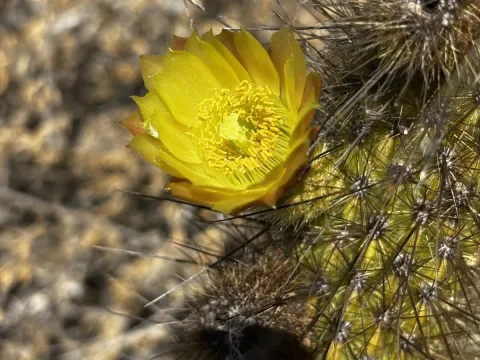
Bergerocactus is a monotypic genus of succulent plants belonging to the Cactaceae family. The genus is represented by a single species, Bergerocactus emoryi, which has a restricted natural range primarily covering the coastal regions of Southern California and Baja California in Mexico.
What the section contains

Bergerocactus
In its natural habitat, this crop prefers rocky slopes and open areas with high solar radiation. Botanically, the plant forms dense, clumping colonies of vertical, cylindrical stems densely covered in yellowish spines, which give the plant a distinct golden appearance under direct sunlight.
Successful cultivation of Bergerocactus requires well-drained, mineral-based substrates that mimic poor, rocky soils. The plant is extremely sensitive to excessive moisture in the root system, making the selection of an appropriate substrate the primary condition for survival in artificial environments.
The crop is heat-loving but can withstand moderate temperature fluctuations typical of coastal Mediterranean climate zones. In greenhouse or outdoor settings, it is essential to provide free air circulation to prevent moisture stagnation and surface overheating of the soil.
The economic use of Bergerocactus is primarily limited to ornamental horticulture and the collecting of rare succulents. In landscape design, it is often utilized to create accent compositions in xeriscaped gardens due to its high aesthetic value and striking visual profile.
The main threats to the health of Bergerocactus are linked to improper irrigation, which leads to the development of fungal infections and root rot. Excessive humidity during the dormant winter period is the primary enemy of this plant, often triggering necrosis of the stems.
Among pests, mealybugs and spider mites pose the greatest danger, as they target growth points and young shoots. In greenhouse conditions, scale insects may also occur, feeding on the plant's sap.
To prevent infestation, it is necessary to regularly inspect the basal parts of the stems for spots or soft, mushy areas. Upon detecting early signs of rot, the affected part should be removed immediately and the cut surface treated with fungicides.
Pests are controlled using specialized systemic acaricides and insecticides. It is crucial to strictly follow dosage instructions, as the cactus epidermis is sensitive to aggressive chemical components found in many pesticides.
- Ensuring a dry dormancy period during the winter.
- Regular aeration of the root system through substrate cultivation.
- Use of strictly mineral-based soil mixes.