
Brasiliopuntia brasiliensis
Brasiliopuntia brasiliensis
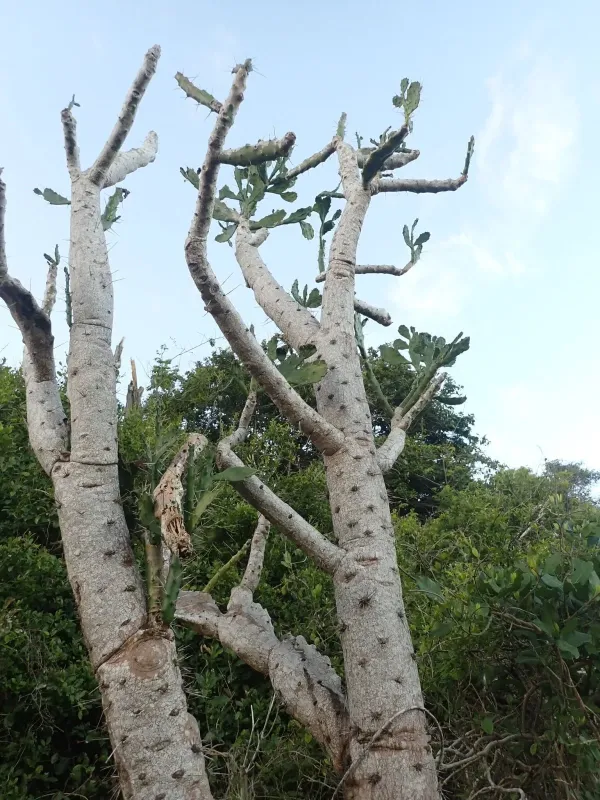
Description
Growing requirements
Brasiliopuntia brasiliensis is a unique tree-like cactus belonging to the Cactaceae family. Unlike typical Opuntia species, it develops a distinct woody central trunk, which can grow up to 20 meters tall, making it an architectural standout in the botanical world.
Native to the tropical regions of South America, including Brazil, Paraguay, and Peru, this plant thrives in warm, frost-free climates. It is well-adapted to environments with alternating dry and wet seasons, requiring well-draining soil to ensure the health of its root system.
The optimal soil for this crop is a nutrient-rich, neutral-to-slightly-acidic substrate that prevents waterlogging. Proper aeration is crucial, as the roots are highly susceptible to rot if submerged in stagnant water for extended periods during the growing season.
The plant demands high light intensity to maintain its characteristic structure. In shaded environments, the trunk becomes etiolated and the branching habit weakens, significantly reducing the overall vigor and productivity of the plant in a commercial setting.
Agricultural techniques focus on careful pruning to manage the tree's height and density, especially when cultivated in greenhouses or limited spaces. Propagation is primarily performed through cuttings, which root effectively in sandy, warm media during the peak growth season.
Main diseases and pests
The primary threats to Brasiliopuntia brasiliensis include fungal and bacterial rot, which typically manifest under poor drainage conditions. These diseases can devastate root systems, leading to rapid systemic decline if moisture management is not strictly controlled.
Insects such as mealybugs and spider mites are frequent pests, particularly in dry, high-temperature greenhouse environments. They colonize the succulent joints and stems, extracting vital sap and weakening the plant's structural integrity over time.
Soil-borne nematodes can pose a risk in certain regions, damaging roots and facilitating the entry of secondary pathogens. Preventive measures include using sterilized growing media and implementing crop rotation strategies if grown in high-density nursery blocks.
Mechanical injuries resulting from improper pruning are common entry points for pathogens. It is essential to disinfect all cutting equipment between plants to stop the spread of potential infections, especially during the humid summer months.
Regular monitoring of the canopy and trunk base is vital for early detection of pest infestations. Integrated Pest Management (IPM) practices, including the use of biological controls and targeted pesticides, remain the most effective strategy for maintaining high yield quality.
Harvesting
The agricultural potential of Brasiliopuntia brasiliensis lies in its edible fruit, which is highly appreciated in its native regions. Harvesting is carried out when the fruit reaches full maturity, typically identified by the development of a vibrant yellow or orange skin color.
The fruit is used in local food industries for creating jams, jellies, and refreshing juices. It contains significant amounts of antioxidants and essential vitamins, positioning it as a potential specialty fruit crop for arid and semi-arid agricultural landscapes.
Beyond culinary uses, the plant is valued in landscaping as an effective ornamental hedge. Its dense, thorny branches provide a natural, impenetrable barrier, making it an excellent choice for perimeter security in warm-climate gardening and large-scale agricultural estates.
Experimental studies explore the use of plant tissues for natural colorants and bioactive compounds. The succulent segments provide a consistent source of biomass, which can be harvested periodically without causing permanent damage to the primary tree structure.
Handling the harvest requires precision, as the glochids and sharp spines can cause skin irritation. Operators are advised to use thick gloves and specialized mechanical harvest tools to protect the fruit quality and ensure worker safety during the picking process.