
Carnegiea
Carnegiea
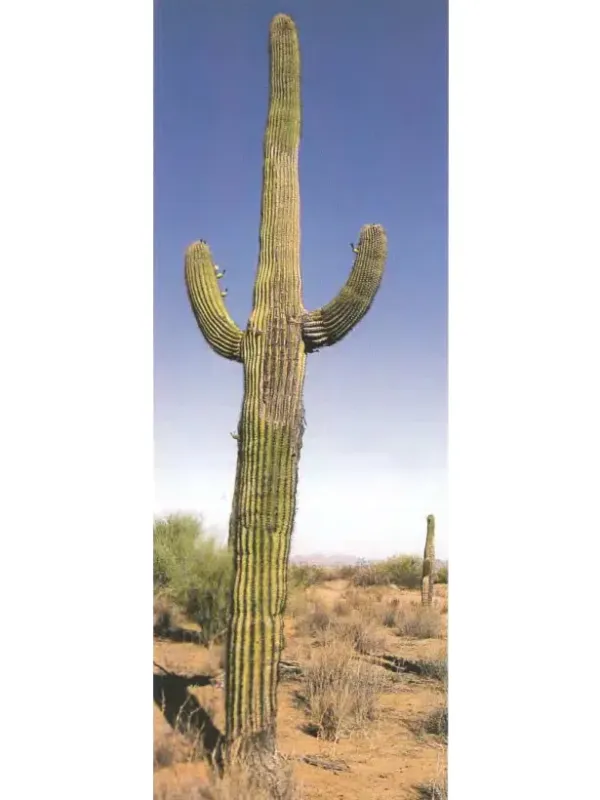
Description
Sowing dates
Propagating Carnegiea from seed is a long-term agricultural endeavor that requires precision and patience due to extremely slow development stages.
Seeds should be sown in a sterile, inorganic substrate consisting mainly of pumice, perlite, and coarse sand to ensure optimal drainage.
Maintaining a constant temperature between 25°C and 32°C is essential for successful germination, which usually occurs within a few weeks under glass.
Seedlings must be shielded from intense solar radiation during the first two years, as their epidermis is highly susceptible to tissue burning.
Gradual hardening-off is necessary before transferring juvenile plants to outdoor environments or permanent greenhouse locations.
Growing requirements
Carnegiea is a prominent member of the Cactaceae family, native to the Sonoran Desert, known for its iconic columnar growth form.
The plant thrives in mineral-rich, well-draining soils with extremely low nutrient requirements, reflecting its adaptation to nutrient-poor desert soils.
Full sun exposure is mandatory for healthy development; reduced light causes etiolation, where the stem becomes thin, weak, and loses its structural integrity.
Water requirements are minimal, following a strict cycle of deep watering during the active growth period and complete drought during winter dormancy.
The plant demonstrates high efficiency in water-use, storing vast amounts of water in its fibrous, succulent stems to survive extended dry spells.
Main diseases and pests
The most significant threat to Carnegiea in cultivation is root rot caused by stagnant water, which often proves fatal for the plant.
Pests such as mealybugs and spider mites thrive in low-humidity environments, necessitating regular monitoring of the plant's surface.
Fungal pathogens often invade through surface wounds, leading to blackened lesions that can spread rapidly throughout the succulent tissue.
Preventive measures include maintaining good airflow and avoiding any form of mechanical injury to the thick, protective skin of the cactus.
Environmental stress, particularly sudden cold snaps or prolonged humidity, remains a major challenge for maintaining the health of these specimens.
Harvesting
While not a traditional food crop, the fruit of the Carnegiea (saguaro fruit) has historically been harvested by indigenous populations.
The harvest occurs when the fruit splits open, revealing a bright crimson pulp embedded with numerous small black seeds.
Traditionally, these fruits were collected manually using long poles made from the dried ribs of dead cacti, emphasizing the plant's structural utility.
Post-harvest processing involves separating the pulp from the skin and seeds, often used for producing syrups, jams, or fermented beverages.
Sustainable harvesting practices are essential to protect the long-term viability of wild populations, as the plant matures very slowly.