
Brittle prickly pear
Opuntia fragilis
Description
Growing requirements
The brittle prickly pear (Opuntia fragilis) is a hardy perennial succulent belonging to the Cactaceae family. It is recognized as one of the most cold-tolerant cactus species, native to vast regions of North America.
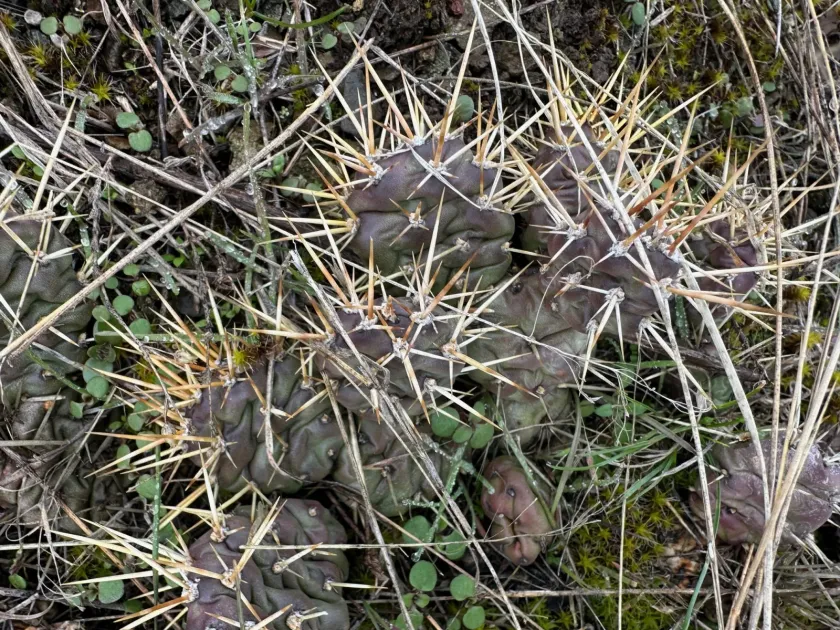
Morphologically, the plant is characterized by small, thick, and brittle segments. These joints detach easily from the parent plant upon contact, serving as a highly effective natural method of vegetative propagation for the species.
Optimal growth requires well-draining, gritty, or sandy soils to ensure root aeration. Waterlogging is the most critical factor to avoid, as it leads to rapid tissue decay and the loss of the plant's structural integrity.
The crop is highly adapted to arid and semi-arid climates with significant seasonal temperature variations. It thrives in full sun exposure, which is necessary to maintain its compact growth form and promote the development of its characteristic flowers.
In terms of agricultural utility, Opuntia fragilis is studied for its potential in dryland forage production. Its ability to survive harsh winter conditions makes it a candidate for high-latitude agricultural systems where more sensitive succulents cannot persist.
Main diseases and pests
Root rot caused by fungal pathogens is the primary threat to the stability of a plantation. This is almost exclusively associated with improper drainage or excessive irrigation levels that prevent the soil from drying out.
Mealybugs are common pests that colonize the crevices between stem segments, siphoning plant fluids. Infestations weaken the plant, often leading to secondary bacterial infections that spread through the brittle stem structure.
Spider mites can become a significant issue during prolonged periods of heat and low atmospheric humidity. These pests cause chlorotic spots on the pads, reducing the overall photosynthetic capacity of the crop.
Slugs and snails may feed on the young, succulent pads during wet spells, leaving unsightly scars. Protective measures, such as the application of barriers or biological control agents, are often employed in organic setups.
Root-knot nematodes can impede growth by forming galls on the root system. Effective management relies on preventing the introduction of pathogens through contaminated soil or infected planting stock.