
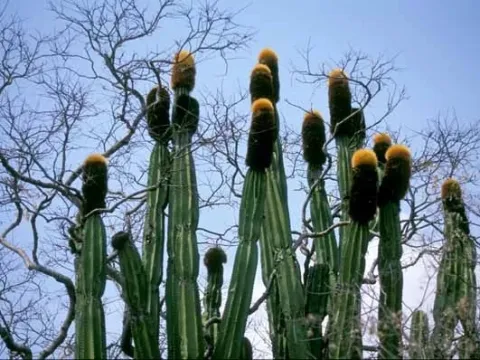
Backebergia
Backebergia
Backebergia is a genus of cacti belonging to the Cactaceae family, native to the arid regions of Mexico. These plants are recognized for their impressive, towering column-like growth habit in their natural habitat.
What the section contains

Backebergia
Botanically, they are characterized by well-defined, prominent ribs that provide structural integrity and help the plant manage heat. The areoles are equipped with rigid, strong spines that protect the plant and minimize transpiration.
Cultivation requires abundant direct sunlight to mimic the intense desert conditions. Without sufficient light exposure, the plant will etiolate, losing its compact, majestic form and becoming structurally weak.
The growing medium must be highly porous and mineral-based. A standard commercial potting mix is usually too organic; therefore, it is necessary to mix in a large percentage of pumice, coarse sand, or grit to ensure fast drainage.
Temperature management is crucial: the plant thrives in hot, arid conditions during the growing season. However, providing a dry, cooler rest period during winter is essential to stimulate the natural physiological cycle and promote future flowering.
The most critical threat to Backebergia is overwatering, which leads to root rot. Once the roots are compromised by excess moisture, the decay can quickly move up the succulent stem, often resulting in the loss of the plant.
Pests such as mealybugs can colonize the plant, taking advantage of the crevices between the ribs. These pests are notoriously difficult to control due to the dense spine network that interferes with direct treatment application.
Spider mites are another potential concern, especially if the cactus is kept in a dry environment without proper air circulation. Their activity leaves disfiguring marks on the epidermis that never fade.
Fungal infections can occur if the cactus is wounded. Any break in the skin of the plant must be allowed to callous over in a dry, shaded area to prevent pathogens from entering the vascular system.
To ensure plant health, regular monitoring is necessary. Using systemic insecticides during the peak growing season can provide a protective barrier against sap-sucking insects that commonly attack these succulents.