
Racinaea multiflora
Racinaea multiflora
Description
Sowing dates
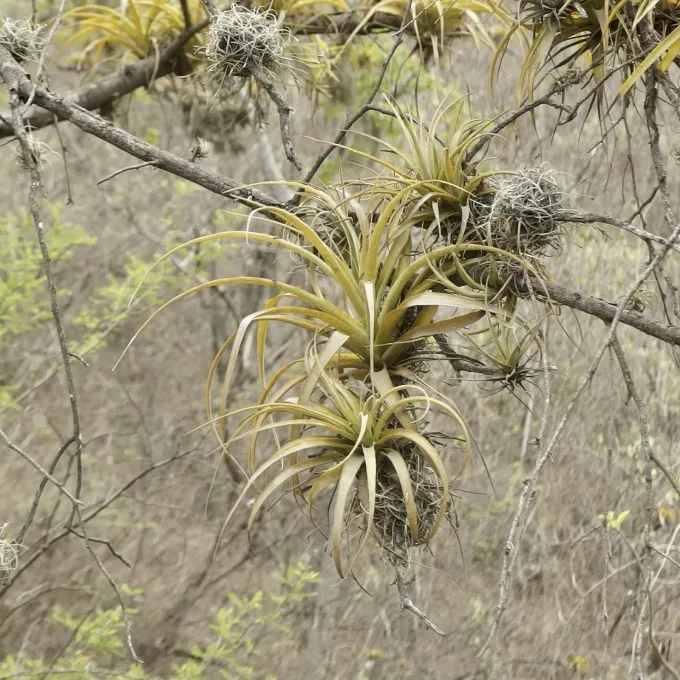
Racinaea multiflora is a fascinating member of the Bromeliaceae family, native to the tropical montane forests of Central and South America where it grows as an epiphyte.
In cultivation, this plant is not grown in traditional soil beds, but rather attached to wood mounts or placed in open containers filled with coarse bark or sphagnum moss to ensure drainage.
Propagation is typically carried out by separating the offsets (pups) that grow from the base of the mother plant once it has finished its flowering cycle.
Seed cultivation is possible but requires professional greenhouse conditions, focusing on sterilized substrates and high-humidity environments to support germination.
The establishment phase requires patience, as the root system takes time to anchor firmly onto the provided substrate, necessitating stable moisture levels during the early stages.
Growing requirements
The plant thrives in bright, indirect light conditions, mimicking the canopy environment where it naturally receives filtered sunlight throughout the day.
Temperature control is essential; Racinaea multiflora prefers daytime temperatures between 20-25 degrees Celsius, with a slight dip in the evening to maintain its metabolic balance.
High humidity is non-negotiable for this species, as it relies on ambient moisture and frequent misting to thrive in an indoor or glasshouse setting.
The root environment must remain aerated, preventing any waterlogging that could lead to immediate decline of the root system and plant tissue.
Effective air circulation is a key requirement to prevent the accumulation of moisture within the center of the leaf rosette, which could trigger rot.
Main diseases and pests
Fungal diseases are the primary threat, often resulting from poor ventilation combined with overly moist environments during cooler times of the year.
Common pests include mealybugs and scale insects, which often congregate in the tight leaf bases, making them difficult to detect and control manually.
Spider mites can become problematic if the humidity levels drop significantly, causing visible stippling and tissue damage to the leaves.
Root rot remains the most common fatal issue, usually caused by improper substrate selection or excessive water application without sufficient drying time.
Integrated pest management, including regular inspection and the use of insecticidal soaps, is highly recommended to maintain the health and appearance of the plants.