
Racinaea dyeriana
Racinaea dyeriana
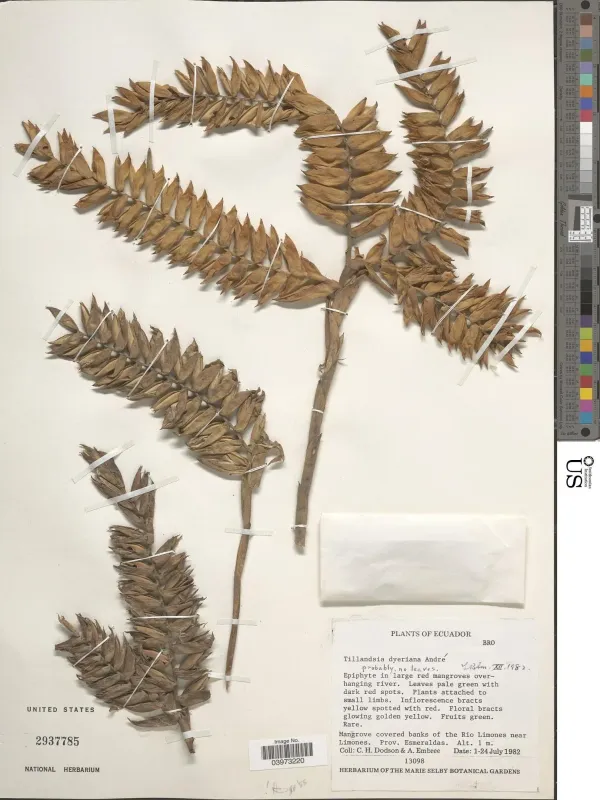
Description
Growing requirements
Racinaea dyeriana is a distinctive species belonging to the Bromeliad (Bromeliaceae) family. Native to the humid cloud forests of Ecuador, it is an epiphyte that typically grows on tree trunks and mossy branches in its natural habitat.
To cultivate this plant successfully, it is essential to replicate its natural environment. The root system requires a very loose, airy growing medium, such as a mix of orchid bark, perlite, and high-quality sphagnum moss to prevent compaction.
Climatic requirements focus on maintaining high atmospheric humidity, ideally above 70%. The plant thrives in temperatures between 18°C and 25°C, and it is crucial to avoid sudden drops in temperature during the night hours.
Light levels should be bright but filtered. Intense, direct sunlight can burn the foliage, whereas insufficient light leads to etiolation and loss of the plant's characteristic vibrant color and structural density.
Watering should be managed by keeping the central tank or rosette filled with clean, soft water. It is vital to flush the water reservoir periodically to prevent the buildup of minerals and organic decomposition products.
Main diseases and pests
Common pests affecting Racinaea dyeriana include mealybugs, which often hide in the tight spaces between leaf bases. Regular inspection is necessary to detect early infestations before they spread across the entire rosette.
Fungal rots are the most common physiological threat. These are usually triggered by stagnant water in the center of the rosette combined with cold ambient temperatures, creating an ideal environment for anaerobic bacteria and fungi.
Scale insects can also cause damage by feeding on the sap. Their presence is often indicated by sticky honeydew secretions on the leaves, which can subsequently attract sooty mold if not treated promptly with horticultural soap.
Spider mites are a significant risk during winter months when indoor heating systems lower the relative humidity. Keeping the plant hydrated and providing adequate air circulation significantly reduces the risk of mite colonization.
To ensure long-term health, growers should practice strict sanitation by removing any decaying leaves or debris from the plant base. Chemical controls should be used cautiously, ensuring that the substances are safe for sensitive bromeliad foliage.