
Racinaea crispa
Racinaea crispa
Description
Growing requirements
Racinaea crispa is a distinct species within the Bromeliaceae family, native to the cloud forests of South America, specifically regions in Ecuador and Peru. As a specialized epiphyte, it has evolved to thrive in high-altitude environments characterized by frequent mist and stable humidity levels.
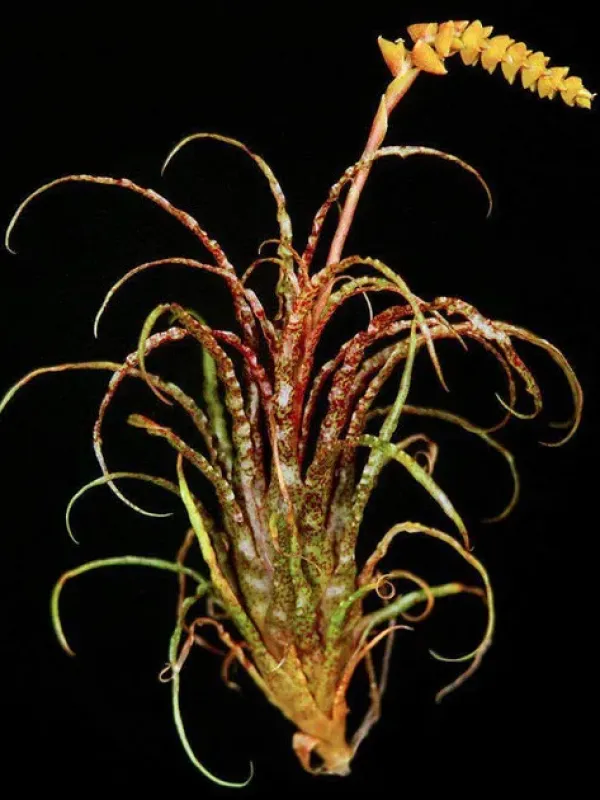
Botanically, the plant is recognized by its gracefully curled or crinkled leaves that form a dense, aesthetic rosette. This unique structural feature makes it a sought-after specimen for botanical gardens and specialized collectors focusing on South American flora.
Cultivation of Racinaea crispa requires meticulous attention to the microclimate. The plant demands a humid environment, ideally between 70% and 80% relative humidity, to mimic its natural montane habitat. Temperatures should ideally be maintained between 15°C and 22°C to ensure optimal growth.
Unlike terrestrial plants, Racinaea crispa does not tolerate heavy soil. It requires an epiphytic mounting medium, such as a coarse mix of pine bark, charcoal, and long-fibered sphagnum moss. This ensures proper drainage and allows sufficient oxygen access to the roots to prevent rot.
Adequate air circulation is essential for the health of the plant, especially in controlled environments like greenhouses. Regular airflow prevents the stagnation of moisture around the foliage, which is a critical measure in preventing fungal diseases in high-humidity cultivation settings.