
Racinaea tetrantha
Racinaea tetrantha
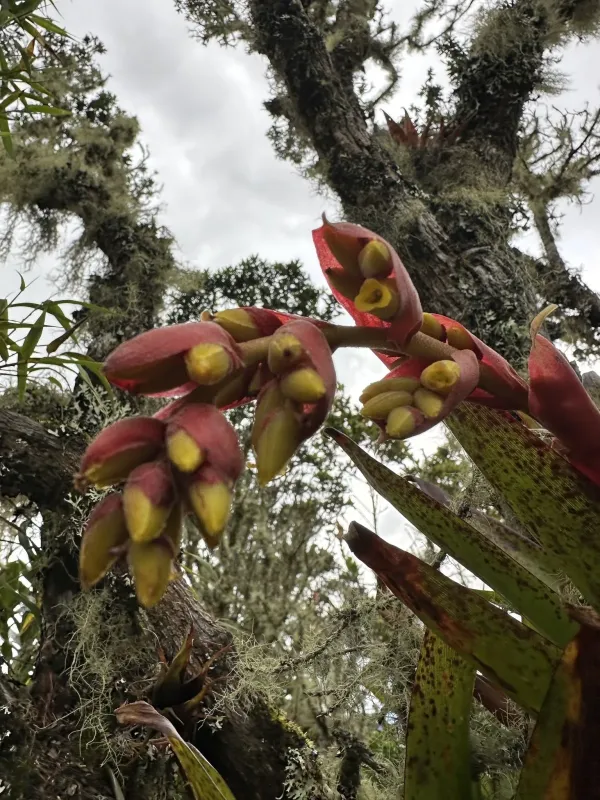
Description
Growing requirements
Racinaea tetrantha is a fascinating botanical species belonging to the Bromeliaceae family. As an epiphyte, this plant naturally thrives in the humid montane forests of the Neotropics, where it grows attached to trees, drawing nutrients from air, rain, and accumulated debris.
The climate requirements for this species are centered on maintaining high atmospheric humidity, ideally between 70% and 90%. Consistent temperatures ranging from 18°C to 24°C are essential, as the plant is sensitive to thermal shock and prolonged cold exposure.
When cultivated, the plant requires a highly porous medium that allows for rapid drainage and excellent aeration. A mixture of pine bark, charcoal, perlite, and dried moss provides the best foundation, preventing root suffocation while maintaining essential surface moisture.
Lighting should be bright and indirect, mirroring the filtered sun found in high-altitude forest canopies. Excessive shade leads to weak, elongated growth, while direct, harsh sunlight can scorch the foliage and disrupt the plant's delicate moisture-retaining mechanisms.
Irrigation is best achieved through misting or gentle watering into the central rosette. It is vital to use high-quality, mineral-free water to prevent the buildup of salts, which can accumulate in the leaf axils and cause systemic toxicity over time.
Main diseases and pests
Root and crown rot are the primary threats to Racinaea tetrantha, typically triggered by improper watering schedules or stagnant water trapped in the rosette. Once rot begins, the plant tissue degrades rapidly, making early detection via observation critical.
Mealybugs are the most common pests encountered in cultivation. These insects thrive in protected areas such as leaf bases, where they colonize and weaken the plant, eventually leading to secondary fungal infections that are difficult to treat.
Scale insects also pose a significant risk, attaching themselves to the leaves and draining nutrients. Their hard outer shells protect them from many common pesticides, often necessitating manual removal or specialized systemic applications by experienced growers.
Fungal leaf spot diseases may appear if the ambient airflow is insufficient. Stagnant air allows moisture to sit on the leaf surfaces, creating a perfect habitat for pathogens, which necessitates the use of fans or proper spacing in greenhouse environments.
Spider mites are a classic symptom of suboptimal humidity. These tiny pests proliferate rapidly in dry air, causing the foliage to lose its luster and turn mottled. Regular misting and maintaining humidity are the most effective non-chemical deterrents.