
Guzmania blassii
Guzmania blassii x Tillandsia leiboldiana
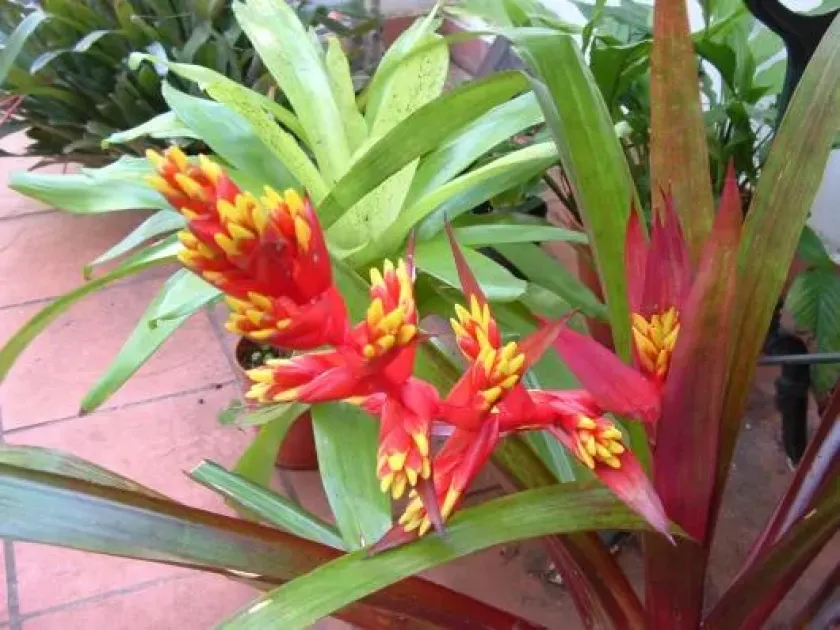
Description
Growing requirements
Guzmania blassii is a hybrid ornamental plant belonging to the Bromeliad family. It is known for its spectacular colorful bracts and rosettes of evergreen foliage. In its natural environment, this plant typically grows as an epiphyte, using its root system mainly for attachment rather than nutrient absorption.
The cultivation of this hybrid requires a tropical environment with temperatures consistently between 20°C and 25°C. Exposure to temperatures below 15°C can cause significant stress to the plant, potentially leading to dormancy or permanent tissue damage if the cold persists.
Soil requirements for this species are unique; it needs a highly porous and acidic substrate. A standard mix should include pine bark, peat moss, and perlite, which ensures excellent drainage and allows for sufficient gas exchange, mimicking the natural conditions of an epiphytic habitat.
Light intensity is a critical factor for successful blooming. While these plants enjoy bright light, they are highly sensitive to direct noon sun, which can scorch the delicate leaf blades. Providing bright, indirect light is essential for maintaining the vibrant coloration of the bracts.
Watering practices differ from standard potted plants. Water should be poured directly into the central rosette, while the potting medium should be kept only slightly moist. Using filtered or distilled water is recommended to prevent mineral build-up within the foliage tissues.
Main diseases and pests
Scale insects are among the most common pests that affect Guzmania blassii. These small, armored insects sap the plant's vitality by feeding on the sap, and their presence is often marked by sticky honeydew residue on the leaves, which can later encourage sooty mold growth.
Mealybugs pose a significant risk, as they tend to congregate in the tight crevices of the leaf rosettes. Their presence is easily identified by a white, cotton-like substance. Once detected, targeted application of appropriate insecticides is necessary to curb the infestation.
Root rot caused by stagnant water is the most frequent pathological issue. When the roots remain in a saturated, anaerobic state, fungi quickly colonize the root zone, leading to rapid decay of the plant's base and death of the entire rosette.
Spider mites can become a major concern during dry, low-humidity periods. They cause tiny, pale stippling on the foliage, eventually leading to a loss of color and plant vigor. Regular misting and proper air circulation are effective preventative measures.
To maintain plant health, growers should conduct regular inspections of the leaf axils and the base of the plant. Maintaining hygiene by removing dead foliage and ensuring proper ventilation significantly reduces the likelihood of severe pest or disease outbreaks.