
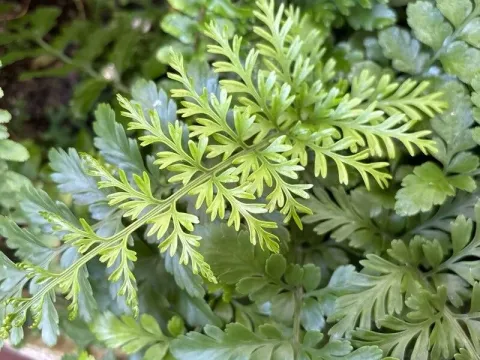
Balearic spleenwort
Asplenium balearicum
Balearic spleenwort (Asplenium balearicum) is a specialized fern species within the Aspleniaceae family. Native to the Mediterranean region, particularly the Balearic Islands, this plant is valued by enthusiasts for its delicate foliage and unique morphological characteristics.
What the section contains
Balearic spleenwort
In terms of climate requirements, this culture prefers mild temperatures and protection from direct solar radiation. High-intensity light can easily damage the fronds, leading to browning and necrosis, therefore filtered or indirect lighting is strictly required.
The substrate must be characterized by excellent drainage properties while maintaining sufficient moisture retention. A mix consisting of peat moss, pine bark, and perlite provides an ideal environment for root development and prevents soil compaction.
High relative humidity is essential for the health of this fern. Growers should ensure that the ambient humidity remains above 60%, utilizing regular misting or mechanical humidifiers to replicate the natural maritime microclimate of its habitat.
Irrigation practices must be precise; the plant requires consistent moisture but cannot tolerate waterlogging. Using room-temperature, filtered, or distilled water is recommended to avoid chemical buildup in the substrate which can negatively impact the fern's sensitive root system.
Common pests affecting Asplenium balearicum include spider mites and scale insects, both of which thrive in dry, stagnant air conditions often found in indoor residential environments.
Fungal pathogens represent the most significant threat to this species, primarily manifesting as root rot or leaf spot, usually triggered by over-watering or poor air circulation around the crown of the plant.
Proactive monitoring of the leaf undersides is recommended to catch infestations at an early stage, allowing for mechanical removal before significant tissue damage occurs.
Chemical intervention should be considered a last resort, prioritizing biological control agents or insecticidal soaps that are safe for use on delicate fern fronds.
Maintaining strict sanitation standards, such as cleaning gardening tools and using sterilized potting mixes, significantly reduces the likelihood of introducing pathogens to the collection.