
Black spleenwort
Asplenium adiantum-nigrum
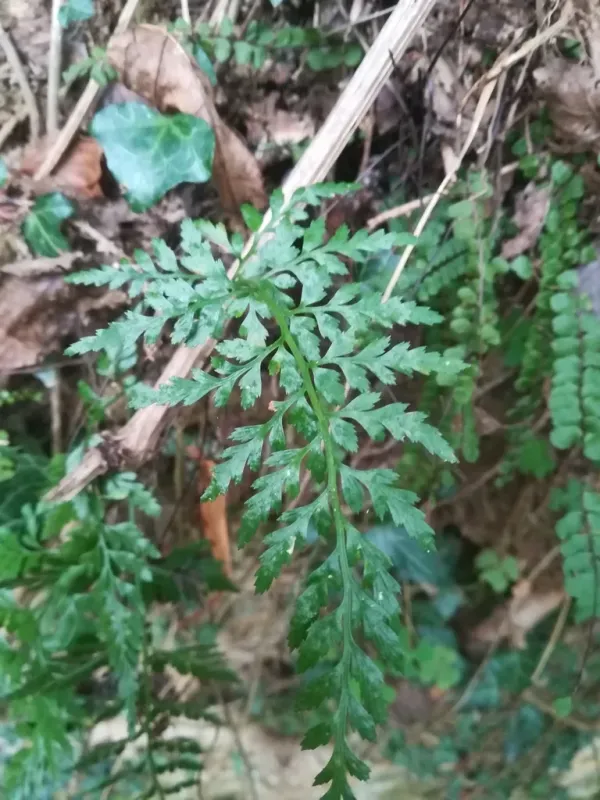
Description
Growing requirements
The Black spleenwort (Asplenium adiantum-nigrum) is a perennial fern belonging to the Aspleniaceae family. It is native to a broad range spanning from Europe and Asia to North Africa and North America, typically inhabiting rocky crevices and shaded sheltered areas.
Botanically, it is characterized by its triangular, dark green, leathery fronds that are bipinnate or tripinnate in structure. Its glossy appearance and slow-growing nature make it a prized specimen for indoor gardening and specialized botanical collections.
The culture requires a well-draining, slightly acidic soil substrate. A mix of peat, perlite, and bark is generally recommended to replicate the natural growing conditions of forest floors and rocky cliffs, ensuring roots are not prone to waterlogging.
Environmental management is key, as the plant prefers stable, moderate temperatures between 18°C and 22°C. While it is hardy in many climates, it thrives best in environments with high ambient humidity and filtered light.
Agricultural techniques focus on preventing dehydration while ensuring the soil remains moist to the touch. During the growing season, a dilute balanced liquid fertilizer is applied sparingly to support foliage growth without over-stimulating the root system.
Main diseases and pests
Scale insects and mealybugs are the most common pests encountered in the cultivation of Black spleenwort. These pests damage the vascular tissue of the fronds, leading to chlorosis and stunted development of the plant.
Root rot, often caused by Phytophthora or Pythium species, remains the most significant threat to the survival of the culture. It is primarily triggered by poor soil aeration and water management errors.
Spider mites often emerge as a problem during periods of low humidity. Implementing frequent misting or using ultrasonic humidifiers creates an environment unfavorable for these arachnid pests.
Leaf spot diseases, often resulting from stagnant air and improper ventilation, can compromise the aesthetic value of the foliage. Proper spacing and airflow are crucial to mitigate these fungal risks.
In cases of heavy infestation or severe infection, integrated pest management practices should be followed, utilizing mechanical removal combined with targeted biological or chemical control agents.