
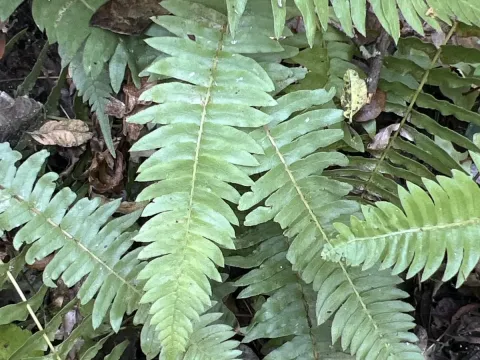
Blechnum
Blechnum L.
Blechnum (Blechnum L.) belongs to the Blechnaceae family. It is a perennial herbaceous plant naturally distributed across tropical and subtropical regions of the world, including South America, Australia, and New Zealand.
What the section contains


Blechnum
This crop demands high ambient humidity, ideally maintained between 60% and 80%. Dry indoor environments are detrimental, causing the delicate fronds to brown and wither rapidly if not supplemented by regular misting or humidifiers.
The soil must be acidic, well-draining, and rich in organic matter. A mixture of peat moss, leaf compost, and coarse sand or perlite provides the necessary structure to prevent compaction and ensure root aeration.
Blechnum thrives in bright, indirect light. Direct sunlight exposure should be avoided at all costs, as it rapidly scorches the fronds, permanently damaging the ornamental value and overall health of the plant.
Consistent watering is vital for this species. The growing medium should be kept consistently moist but never waterlogged. Using tepid, distilled, or rainwater is recommended to avoid mineral salt buildup in the soil, which sensitive ferns often struggle to tolerate.
Scale insects are among the most persistent pests affecting Blechnum. They appear as small, stationary brown bumps on the fronds, feeding on sap and often secreting sticky honeydew that encourages sooty mold growth.
Spider mites represent a major threat in dry conditions. They leave fine, barely visible webbing and cause the foliage to develop a speckled, chlorotic appearance before dropping off prematurely.
Root rot, primarily caused by Pythium or Phytophthora fungi, is a frequent issue in poorly drained pots. It leads to the rapid collapse of the plant and is often only detected once the damage is advanced.
Leaf spot diseases caused by various pathogens can occur if the foliage remains wet for extended periods without adequate ventilation. Small dark lesions on the fronds are early warning signs of infection.
Effective management includes maintaining proper airflow, quarantine procedures for new plants, and the use of horticultural oils or systemic fungicides when infestations or infections are detected early.