
Black spleenwort
Asplenium adiantum
Description
Growing requirements
Black spleenwort (Asplenium adiantum-nigrum) is a hardy fern species belonging to the Aspleniaceae family. It is native to various regions across Europe, Asia, and North America, where it thrives in rocky crevices and woodland environments with high humidity.
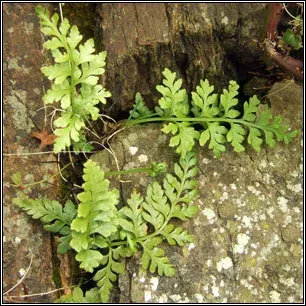
The plant is characterized by its triangular, dark green fronds with shiny, leathery textures. Botanically, it is a perennial that relies on spore dispersal for natural reproduction, though in cultivation, it is often propagated by division.
Successful cultivation requires a well-draining, humus-rich soil mixture that simulates the forest floor. It is essential to maintain high relative humidity levels, as the plant is susceptible to desiccation in dry indoor environments.
Light requirements are moderate, with the plant favoring dappled shade or indirect light. Exposure to direct sunlight can severely damage the fronds, leading to rapid browning and tissue necrosis.
In agricultural practice, it is widely utilized for ornamental purposes, including indoor garden displays and temperate rockeries. The plant's ability to thrive in shaded conditions makes it a versatile choice for professional interior landscaping.
Main diseases and pests
Scale insects are among the most persistent pests for this fern, often clustering on the underside of fronds. Regular inspection and the application of horticultural oils or systemic insecticides are required to manage their populations.
Root rot, driven by waterlogged soil conditions, remains the primary threat to the longevity of the plant. Ensuring adequate drainage and avoiding heavy, compacted soils is vital for preventing the proliferation of soil-borne pathogens.
Spider mites are a recurring issue in environments where the air is too dry. Maintaining optimal humidity levels is the most effective preventative measure against these sap-sucking pests during the growing season.
Fungal infections, such as leaf spot, can appear when air circulation is insufficient within the cultivation area. Improving ventilation and reducing overhead watering helps to mitigate the spread of these fungi.
Mealybugs can occasionally infest the base of the fronds, causing stunted growth and yellowing. Early detection and mechanical removal are recommended alongside standard chemical control measures for large-scale operations.