
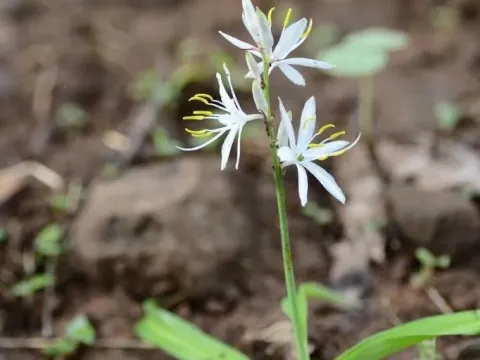
Chlorophytum
Chlorophytum Ker Gawl.
Chlorophytum (Chlorophytum Ker Gawl.) is a perennial herbaceous plant belonging to the Asparagaceae family. Originally native to the tropical regions of Africa, these plants have evolved as versatile ground covers and epiphytes, adapting well to diverse environments ranging from dense forest floors to rocky substrates.
What the section contains


Chlorophytum
Botanically, the plant is characterized by a rosette of long, slender, arching leaves and adventitious roots that often grow into thickened tubers. These specialized roots are vital for water storage, making the plant physiologically resistant to moderate dry spells throughout the growing season.
Cultivation requires well-draining, nutrient-rich potting media with a neutral to slightly acidic pH. For professional production, a mixture of peat, perlite, and pine bark is often employed to ensure maximum porosity and gas exchange, preventing root asphyxiation in high-density greenhouse setups.
Environmental management involves maintaining stable temperatures between 18°C and 25°C. While the plant can tolerate lower light levels, bright, indirect sunlight is essential for optimal color expression and the production of healthy vegetative offsets, which are the primary units for propagation.
Water management is the cornerstone of successful Chlorophytum production. Irrigation should be applied thoroughly but infrequently, allowing the substrate to achieve a partial dry-down phase. This promotes healthy root development and discourages the proliferation of moisture-loving pathogens.
The primary biotic threats to Chlorophytum include spider mites, mealybugs, and scale insects. These pests feed on the cellular sap of leaves, causing chlorosis and structural damage that reduces the aesthetic and commercial quality of the crop, especially in large-scale nursery environments.
Root rot, predominantly caused by Pythium or Fusarium species, poses the most significant threat to plant health. It typically manifests in poorly aerated or waterlogged substrates, leading to the rapid decay of the root system and the subsequent wilting of the entire plant structure.
Environmental stressors such as fluoride sensitivity often result in leaf-tip necrosis, which is frequently misidentified as a pathological disease. This physiological disorder is common when using fluoridated tap water for irrigation and can be managed by using distilled or filtered water.
Management of these threats involves an integrated pest management (IPM) approach. This includes the use of selective insecticides, biological controls, and strict hygiene protocols to eliminate necrotic plant material that serves as a reservoir for pathogens and harmful insects.
Corrective cultural practices, including thinning dense populations to improve airflow and monitoring for the first signs of pest infestation, are essential for maintaining crop vigor. Proactive climate control remains the most effective strategy for preventing widespread infection in a professional agricultural setting.