
Colchian butcher's-broom
Ruscus colchicus
Description
Growing requirements
Ruscus colchicus, commonly known as Colchian butcher's-broom, is a member of the Asparagaceae family. It is a long-lived, evergreen shrub native to the Caucasus region.
This species is highly valued for its ability to thrive in deep shade, making it a staple plant for woodland gardens and areas with limited sunlight where other species fail.
The ideal environment requires humus-rich, well-draining soil with consistent moisture levels. The plant is sensitive to waterlogging, which can cause rapid root decay, especially during dormant periods.
Colchian butcher's-broom is relatively hardy but benefits from protection against freezing winter winds. Its slow growth rate means it requires minimal pruning, usually limited to removing old or damaged stems.
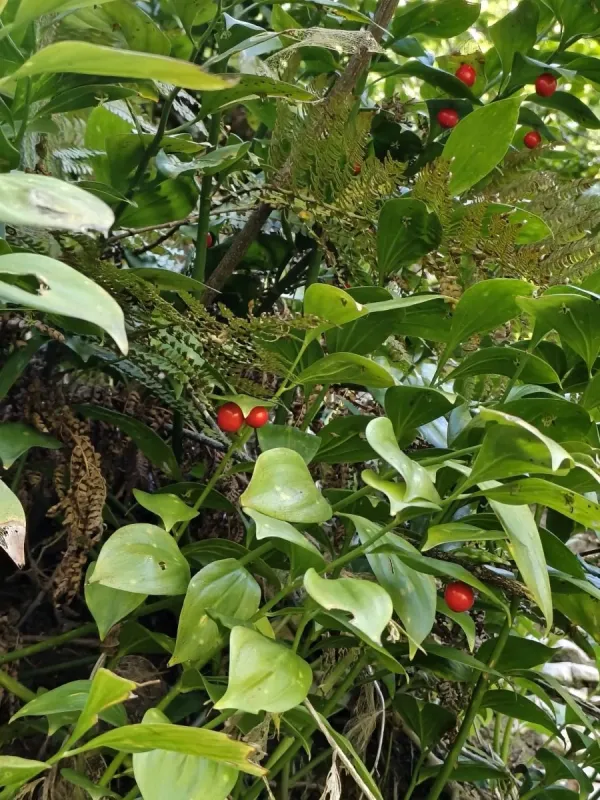
Botanically, it features flattened stems called cladodes that mimic leaves, while its true leaves are reduced to small scales. The plant produces small, inconspicuous flowers followed by bright red, decorative berries.
Main diseases and pests
Common pests include scale insects and mealybugs, which tend to hide in the joints of the cladodes, making manual control difficult without dedicated horticultural oils.
Fungal leaf spot diseases may appear during seasons of high humidity and poor air circulation, often manifesting as necrotic lesions on the cladodes.
Root rot caused by Phytophthora species is a critical threat that usually stems from improper irrigation practices and compacted soil conditions.
Spider mites can colonize the plant during dry spells, causing the cladodes to lose their vibrant color and eventually wither if not treated promptly.
Integrated pest management, including regular inspection and the use of targeted biological controls, is essential for maintaining the health of Ruscus colchicus plantations.