
Chlorophytum amaniense
Chlorophytum amaniense Engl.
Description
Growing requirements
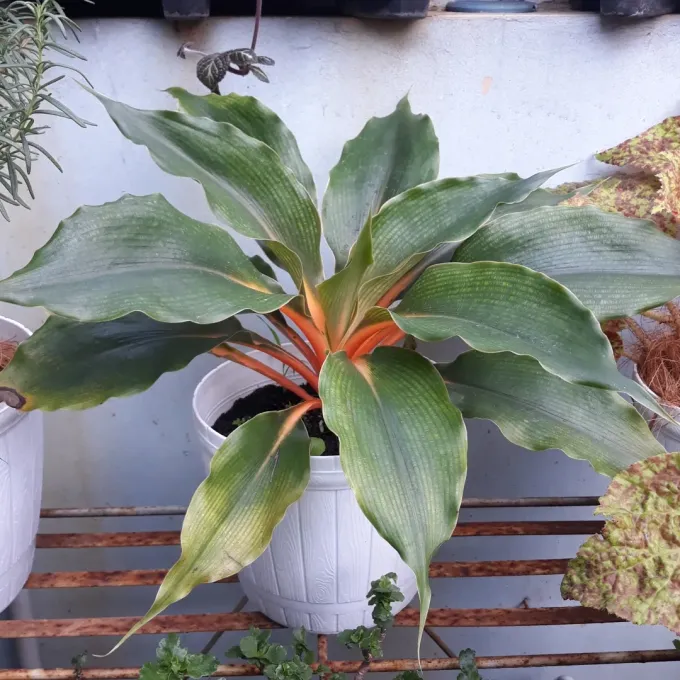
Chlorophytum amaniense, commonly known as the Fire Flash plant, is a perennial herbaceous species belonging to the Asparagaceae family. It is distinct for its brilliant orange petioles and compact growth habit, setting it apart from common spider plants.
Originating from the tropical forests of Tanzania, this species thrives in warm, humid conditions. In cultivation, it performs best when temperatures are maintained between 18 and 24 degrees Celsius throughout the year.
The cultural requirements demand a well-draining, nutrient-rich potting medium. A mix containing peat and perlite or coarse sand ensures the root system remains oxygenated while retaining necessary moisture levels.
Bright, indirect light is essential for this plant to maintain its vibrant orange coloration. Exposure to direct sunlight for extended periods will damage the leaves, while insufficient light leads to greening of the leaf stems.
Watering practices should be consistent, allowing the top centimeter of the soil to dry out between applications. During winter months, the metabolic activity slows down, necessitating a reduction in water frequency to prevent root rot.
Main diseases and pests
Root rot is the most significant physiological threat to Chlorophytum amaniense. It is usually caused by overwatering or poor drainage, which creates an anaerobic environment unfavorable for the roots.
Spider mites are common pests that thrive in dry indoor environments. They pierce the leaf tissue to feed on plant sap, causing yellowing and fine webbing to appear on the underside of the foliage.
Mealybugs are another prevalent concern, appearing as small white, cotton-like masses in the leaf axils. Mechanical removal followed by insecticidal soap application is generally effective for controlling minor infestations.
Scale insects can attach themselves to the stems and leaf undersides, drawing energy from the plant. Regular monitoring of the foliage ensures these pests are identified before they cause significant damage.
To ensure healthy growth and vigor, it is recommended to provide balanced liquid fertilizer during the active growing season. Avoid heavy feeding during dormancy to prevent chemical stress and tissue necrosis.