
Spider plant
Chlorophytum comosum (Thunb.) Jacques
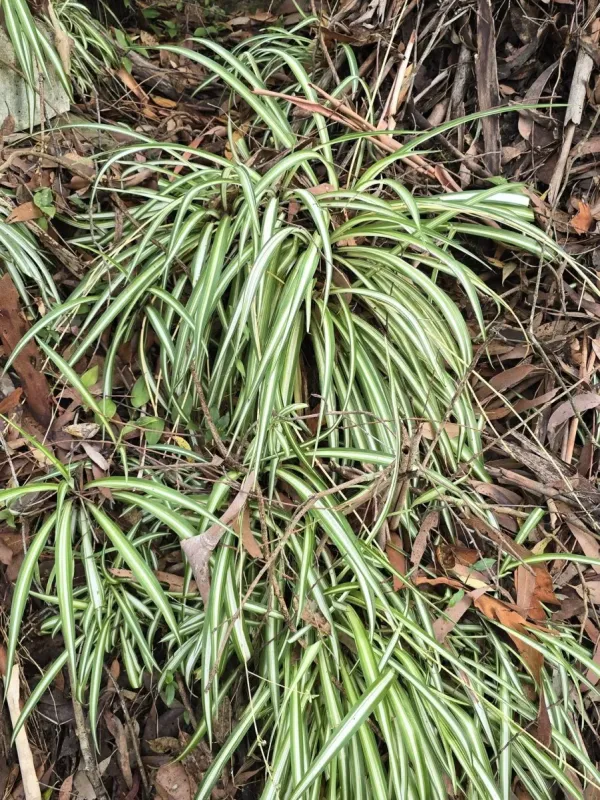
Description
Growing requirements
Spider plant (Chlorophytum comosum) belongs to the Asparagaceae family. It is a perennial herbaceous plant with fleshy, tuberous roots that serve as storage organs, allowing the plant to survive periodic droughts in its native environment.
The species is native to tropical and southern Africa. It thrives in diverse habitats, ranging from moist forests to shaded rocky outcrops, which underlines its high adaptability to different indoor environmental conditions.
The plant performs best under bright, indirect light. While it is highly shade-tolerant, excessive darkness results in stunted growth and a loss of leaf variegation, particularly in cultivars that possess white stripes.
Optimal temperature for development is between 18°C and 25°C. Spider plants are sensitive to frost and should be maintained at temperatures above 10°C to prevent cellular damage and root system failure.
A well-draining, nutrient-rich soil mix is crucial for successful cultivation. Growers should ensure that containers have sufficient drainage holes to prevent anaerobic conditions in the root zone, which can lead to rapid decay.
Main diseases and pests
Spider mites are the most common pest, particularly in low-humidity environments. They cause stippling and webbing on the leaves, which can be mitigated by increasing humidity and cleaning the foliage regularly.
Mealybugs can manifest as small, cotton-like masses in the leaf axils. Physical removal with cotton swabs dipped in alcohol or applying horticultural soap is recommended for minor infestations.
Root rot, typically caused by Pythium or Phytophthora species, occurs when soil moisture levels remain consistently too high. The infection leads to blackening of the base and eventual wilting.
Tip burn is a common physiological disorder often linked to high fluoride or chlorine levels in municipal water, or excessive salt buildup from fertilizers. Using filtered or distilled water often resolves this issue.
Beyond its ornamental value, the spider plant is widely recognized for its phytoremediation capabilities. It is utilized to reduce indoor air pollution levels, specifically by absorbing formaldehyde and carbon monoxide.