
Coahuila yucca
Yucca coahuilensis
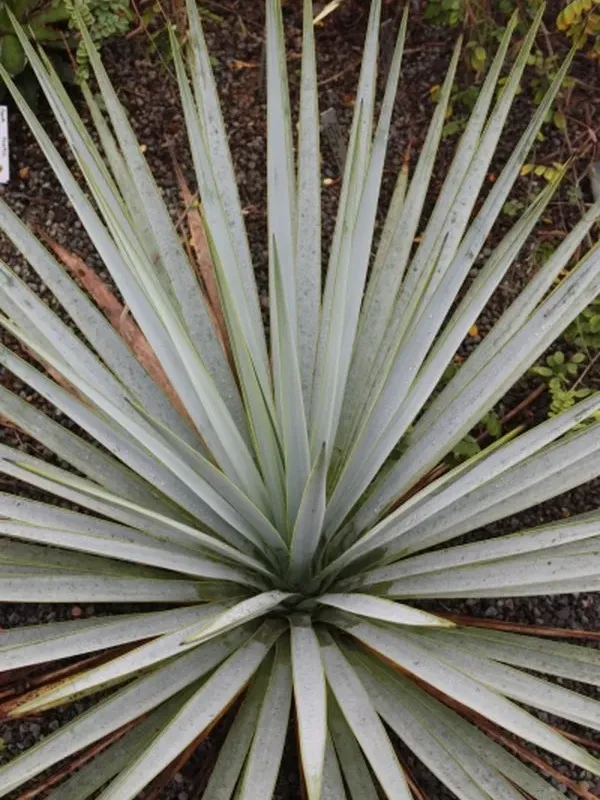
Description
Sowing dates
Sowing of Coahuila yucca is primarily performed using seeds in nursery settings or controlled environments until the seedlings reach a viable stage. Seeds require preliminary scarification to overcome their thick seed coat and accelerate germination.
In its native habitat, natural regeneration follows the rainy season when the soil is sufficiently warm and moisture-laden. Under agricultural conditions, it is preferable to transplant during the period from late spring to early summer.
Vegetative propagation utilizes basal offsets, which are carefully separated from the parent plant during the dormancy period. This technique allows for faster establishment of a robust root system compared to seeding.
Planting density is calculated based on the specific cultivation objective: wider spacing is maintained between rows for mechanical management in fiber production, while closer spacing is acceptable for wild population maintenance.
Transplanting to a permanent site requires thorough soil preparation to ensure perfect drainage, as water stagnation is lethal to the young root systems of this species.
Growing requirements
Coahuila yucca is a xerophyte with high light requirements; the plant thrives in open, well-lit areas without any shading. Lack of sufficient sunlight leads to shoot etiolation and poor fiber quality.
The culture is adapted to arid climates and survives extreme temperature fluctuations and atmospheric droughts. Optimal growth is observed in regions with moderately warm summers and mild winters characteristic of desert landscapes.
Soil requirements favor well-drained, sandy or rocky substrates with low organic content. High humus levels and waterlogged conditions are destructive to the root system of this Asparagaceae species.
The ideal soil pH ranges from slightly alkaline to neutral. High soil acidity inhibits the uptake of essential nutrients and suppresses the development of mycorrhizae, which are vital for the plant's long-term health.
A crucial requirement is minimal disturbance to the natural soil surface, as yucca roots are highly sensitive to mechanical damage caused by deep cultivation between rows.
Yield
Commercial utilization of Coahuila yucca focuses on extracting valuable plant fiber from the foliage. The efficiency of harvest is dependent on the age of the plantation and the consistency of the management regime.
Maximum dry fiber yield is achieved when plants reach maturity, characterized by a fully developed leaf rosette. Industrial-scale harvesting is performed selectively to ensure the plant remains productive.
Plant biomass can also be used as raw material for fodder additives or biocomposites, although its primary economic value remains in its high-strength fiber.
Crop stability relies on the absence of pathogens and the implementation of a proper leaf-cutting cycle. Incorrect harvesting techniques significantly degrade the physical and mechanical properties of the extracted fiber.
Yield in wild populations is naturally limited, whereas controlled agricultural conditions can increase biomass by 20-30% through effective weed control and optimized harvest scheduling.
Main diseases and pests
The primary threat to this culture is root rot, triggered by over-irrigation and water stagnation in the rhizosphere. Fungal infections spread rapidly when drainage is inadequate.
Pests such as mealybugs and spider mites can attack leaf blades during periods of high humidity, causing chlorosis and premature tissue death.
Larvae of specific weevil species may damage the growth point, potentially leading to the death of the entire plant. Consistent monitoring is a mandatory part of integrated pest management.
Weeds pose significant competition for moisture and nutrients during the early stages of seedling development. Mechanical weeding must be performed with extreme care to avoid damaging the root crown.
Rodents may also pose a threat, damaging roots or the base of the stem during periods of food scarcity in the desert environment.
Harvesting
Harvesting involves cutting mature lower leaves, which contain the most developed fiber bundles. This process is carried out with sharpened tools to prevent fraying of the leaf cut.
It is essential to leave a sufficient quantity of young leaves in the center of the rosette to maintain photosynthesis and continuous plant growth after the harvest.
The harvested material undergoes primary processing, known as decortication, where fiber is separated from the parenchymal tissue of the leaf. This step must be performed immediately after cutting.
Once extracted, the fiber is washed, dried in natural conditions under direct sunlight, and graded by length and tensile strength for industrial application.
Harvest frequency depends on leaf regeneration rates; typically, a single plant can produce commercial yields for several years if proper cutting protocols are followed.