
Charybdis
Charybdis
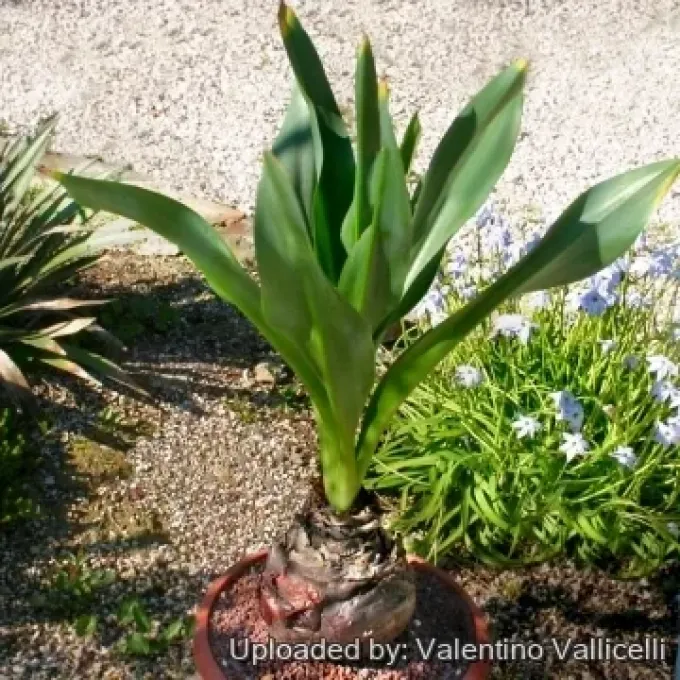
Description
Growing requirements
The Charybdis genus (often taxonomically linked to Drimia or Urginea) is a member of the Asparagaceae family. These perennial bulbous plants are native to arid and rocky environments across the Mediterranean basin and parts of South Africa.
Success in cultivation begins with soil preparation. Charybdis requires a highly porous, gritty, or sandy substrate with excellent drainage. Any water accumulation around the bulb is critical and often leads to rotting.
Sunlight is the most important factor for the plant's health. Charybdis thrives in full sun, which mimics its natural habitat and ensures the bulb stores enough energy for the flowering season.
The plant follows a strict seasonal cycle. During the growing season, consistent but moderate watering is necessary. Conversely, in the dormant period, the soil must be kept almost dry to prevent premature decay.
Fertilization should be applied sparingly during the growth phase. A balanced low-nitrogen fertilizer is preferred to prevent excessive succulent growth and maintain the structural integrity of the leaves.
Main diseases and pests
Fungal infections remain the primary threat to Charybdis, particularly Fusarium rot of the bulb. This typically occurs in poorly aerated soils where moisture persists for too long.
Bulb mites and thrips are the most common pests. These organisms can weaken the bulb significantly, making it susceptible to secondary bacterial infections that spread rapidly under warm conditions.
Improper dormancy management is a major risk factor. If the plant is kept in a warm, humid environment during its required period of rest, it will continue to grow weakly or rot prematurely.
Cultural hygiene is vital for prevention. Sterilizing tools and ensuring that individual bulbs are not touching or showing signs of damage before planting are key components of disease management.
Early intervention with appropriate systemic fungicides is recommended at the first sign of foliage spotting, ensuring that the pathogen does not reach the basal plate of the bulb.