
Salak
Salacca
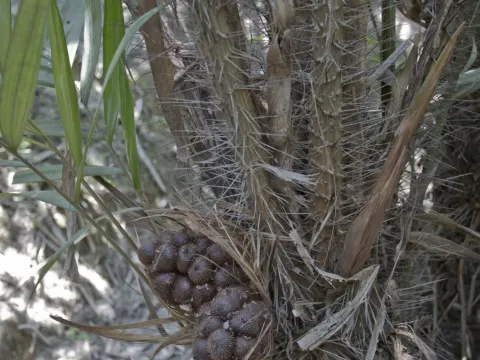
Salak (Salacca zalacca) is a perennial palm species in the Arecaceae family, native to Indonesia and Malaysia. It is characterized by its short stem and long, spiny fronds that can grow several meters in length, forming dense, thorny clusters.
What the section contains


Salak
The plant thrives in humid tropical environments with stable temperatures ranging between +20°C and +30°C. It is strictly a non-frost-hardy species, and exposure to cold weather significantly stunts growth or causes plant mortality.
Soil requirements for salak include well-drained, nutrient-rich alluvial soils. The plant prefers slightly acidic soil conditions with a pH level between 5.0 and 6.5, ensuring optimal nutrient availability for the palm.
Salak is naturally shade-tolerant, making it an excellent crop for agroforestry systems. Farmers often intercrop salak with taller fruit trees, which provide the necessary shade to protect the young palm leaves from excessive solar radiation.
Water management is critical during the initial growth stages. While salak requires consistent moisture, the site must have excellent drainage to prevent root rot, which is a common issue in poorly managed, waterlogged plantations.
The fruit of the salak palm is famous for its scaly, reddish-brown skin that resembles snake skin, hence the common name "snake fruit." Inside, the fruit consists of several segments of crisp, sweet-acidic flesh with one or more hard seeds.
Economically, salak is highly valued for its nutritional profile, containing significant levels of potassium, fiber, and vitamin C. The fruit is consumed fresh or processed into pickles, sweets, and beverages for domestic and international markets.
A mature salak palm can produce up to 20 kg of fruit annually. Orchards usually reach commercial productivity levels within 3 to 4 years after planting, with proper spacing being essential for maximizing the yield per hectare.
Propagation is mainly achieved through vegetative offshoots, which ensures that the offspring maintain the desirable traits of the parent plant. This method is preferred over seed propagation for consistent fruit quality.
Harvesting is labor-intensive due to the sharp thorns protecting the palm clusters. Field workers typically use protective gloves and specialized shears to remove the fruit bunches without damaging the parent plant.
Root rot caused by various soil-borne pathogens is the most severe disease affecting salak plantations. This is often exacerbated by poor field drainage and excessive humidity in the root zone during the rainy season.
Insect pests, including various mites and scales, tend to attack the leaves and developing fruit. Integrated pest management strategies are implemented to keep these populations below the economic injury level.
Rodents represent a constant challenge for salak farmers. Since the fruit is sweet and accessible at the base of the plant, rats and other small mammals can cause significant harvest losses if not controlled.
Leaf blight can occur in dense, overcrowded plantings where airflow is restricted. Regular pruning of dead or diseased leaves improves ventilation and reduces the risk of fungal spread throughout the orchard.
Nutrient imbalances in the soil often lead to reduced yield and leaf chlorosis. Consistent soil testing and the application of balanced organic fertilizers are necessary to maintain plant vigor and sustainable annual production.