
Socratea
Socratea
Socratea is a genus of flowering plants in the palm family, Arecaceae. These palms are native to the tropical rainforests of Central and South America, where they serve as an essential component of the forest structure.
What the section contains

Socratea
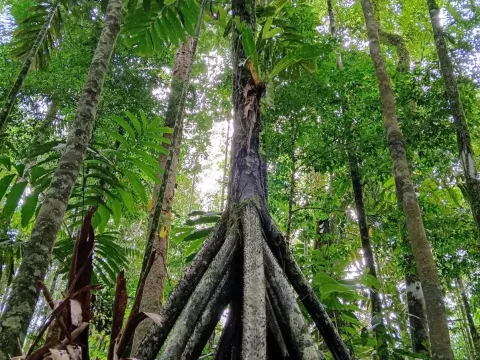
The most distinctive feature of the genus is the presence of stilt roots. These roots grow above the ground, forming a cone-shaped structure that supports the main trunk, allowing the palm to thrive in saturated and unstable tropical soils.
The cultivation of Socratea requires a tropical climate characterized by consistently high humidity and warm temperatures year-round. It does not tolerate frost or cold stress, which can be fatal to the plant.
Soil requirements involve a rich, well-draining substrate. While the palm grows in moist conditions, waterlogged soil without proper aeration can severely damage the specialized root system of the plant.
Young Socratea individuals are shade-tolerant, which is an adaptation to living under the dense canopy of a rainforest. As they mature, they require access to filtered or direct sunlight to reach their full biological potential.
Historically, the wood of Socratea has been utilized by indigenous populations for building construction. The timber is known for its durability and resistance to rot, making it useful for small-scale structural framing.
Harvesting is typically done through artisanal methods. Because of the slow growth rate of these palms, commercial exploitation is limited and must be managed sustainably to prevent population decline.
The fruit of the palm provides nutrition for diverse wildlife, playing a significant role in local ecosystems. Humans occasionally harvest the fruits for consumption, though they are not a primary agricultural commodity.
Agricultural research is currently exploring Socratea for inclusion in agroforestry systems. Such practices aim to restore degraded lands by introducing native species that contribute to soil stabilization and biodiversity.
Successful management of the plant involves careful monitoring of the trunk development and protection of the stilt roots from mechanical damage during any forest clearing or land management activities.
Deforestation and habitat loss represent the most significant threats to Socratea populations. The rapid clearing of tropical rainforests directly impacts the survival of these unique palm species.
Pests such as palm-boring weevils pose a danger to the health of the trees. In natural settings, these pests are balanced by predators, but in altered environments, their impact can be devastating.
Fungal pathogens represent another critical threat, particularly if the plant is stressed due to poor soil drainage or improper site conditions. Effective disease management requires early detection and strict hygiene.
Climate change poses a long-term risk, as altered precipitation patterns can disrupt the delicate balance required for the growth of seedlings. This slows regeneration rates within the forest.
Conservation efforts are vital to protect the genetic diversity of the genus. Establishing protected corridors allows Socratea to persist within its natural range despite increasing environmental pressures.