
Salacca conferta
Salacca conferta Griff.
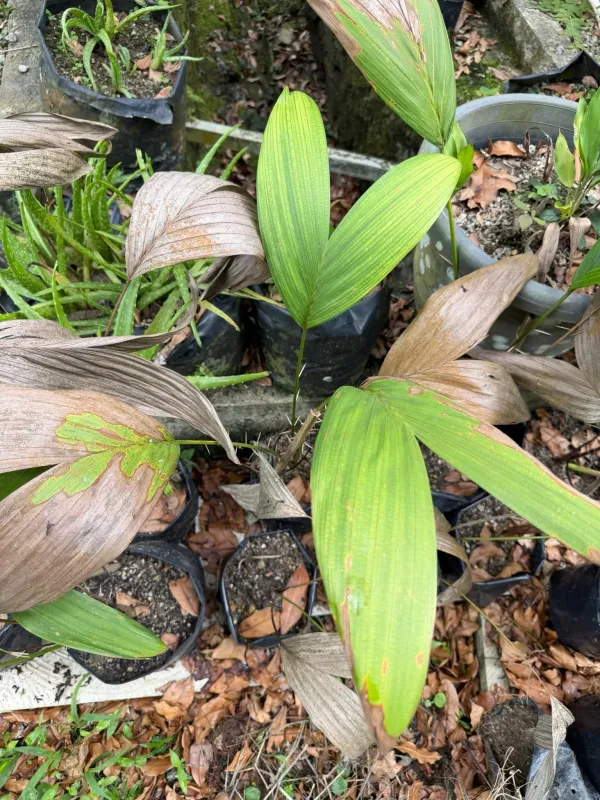
Description
Growing requirements
Salacca conferta is a species of evergreen palm belonging to the Arecaceae family. This plant is native to the tropical rainforests of Southeast Asia, predominantly found in the regions of Malaysia and Indonesia.
The culture requires a humid tropical environment characterized by consistently high temperatures throughout the year. It thrives in humus-rich, well-drained soils, often naturally occurring in forest depressions and swampy areas near water bodies.
Botanically, Salacca conferta is recognized for its spiny petioles and complex pinnate leaves that form dense, clumped thickets. The plant produces inflorescences at the base, which develop into clusters of fruits protected by a distinctive scaly skin.
Cultivation protocols are complex because the palm is sensitive to intense direct sunlight. In agricultural settings, it is best grown under a canopy of larger trees to replicate its natural forest-floor environment.
The economic value of this crop lies in its edible fruit, which has a distinct flavor profile. Furthermore, the leaves and stems are traditionally harvested for weaving and creating various household items, supporting local sustainable economies.
Main diseases and pests
Significant threats to the crop include various tropical pests such as weevils and mealybugs, which specifically target the developing shoots and the crown of the palm, causing stunted growth.
Fungal diseases present a recurring challenge, particularly when the plantation lacks proper air circulation. Excess moisture often leads to root rot, which is a lethal condition for established plants if not addressed early.
Soil-borne nematodes represent another threat, especially in sandy soils that lack a sufficient layer of organic mulch. These pests can weaken the root system, reducing the plant's overall vigor.
Anthropogenic pressure and habitat loss remain critical threats to the species' long-term survival. Transitioning from harvesting wild stands to structured farm cultivation is essential for preserving the genetic pool.
Effective management requires regular sanitary monitoring of the plants and the removal of decaying organic matter to prevent the buildup of pathogens that thrive in the humid tropical climate.