
Senegal date palm
Phoenix reclinata
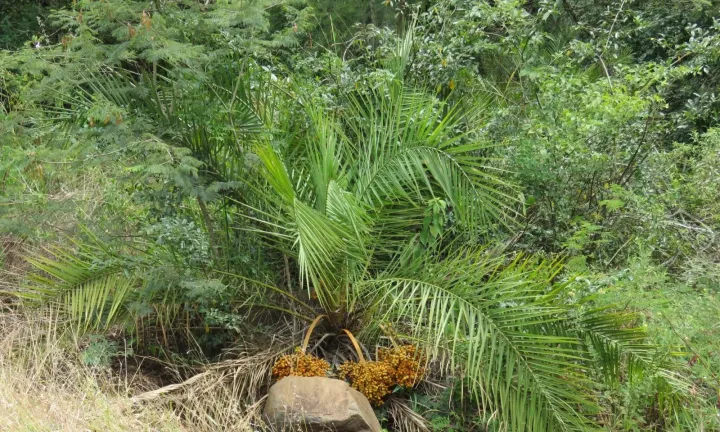
Description
Sowing dates
The Senegal date palm is primarily propagated via seeds. Before planting, seeds should be soaked in warm water for 24 to 48 hours to soften the hard outer coat.
Seeds are sown in a well-draining, sterile potting mix. The optimal temperature for germination is consistently maintained between +25°C and +30°C.
Germination can be slow and erratic, taking anywhere from two months to six months to complete. Consistent humidity is vital for the development of the seedling.
Seedlings should be kept in bright, indirect light. Once they develop their first pinnate leaves, they can be transplanted into individual containers.
Vegetative propagation via offshoots is also possible. These suckers should be carefully separated from the parent plant and rooted in a moist, sandy substrate.
Growing requirements
The Senegal date palm (Phoenix reclinata) belongs to the Arecaceae family. It is a clumping, multi-stemmed palm native to tropical and southern Africa.
This species thrives in full sun but can tolerate partial shade. It is highly adaptable to various soil types, provided that they are well-drained and deep.
It prefers warm tropical climates and is sensitive to heavy frosts. Mature specimens may tolerate light frosts, but protection is recommended for younger plants.
While drought-tolerant once established, the palm benefits from regular deep watering during its growth cycle. It does not tolerate prolonged waterlogging.
In landscaping, it is highly valued for its elegant, arching fronds and multi-trunk habit, making it an excellent specimen plant for parks and gardens.
Main diseases and pests
Common pests affecting Phoenix reclinata include scale insects and mealybugs, which cluster along the stems and the undersides of the leaves.
Spider mites are a significant problem, especially in dry and indoor environments. Frequent misting and proper air circulation help in preventing infestations.
Leaf spot diseases, often caused by fungi, can affect the fronds if the environment remains too humid with poor ventilation for extended periods.
Root rot is the most serious threat, usually resulting from overwatering or poorly draining soil. Ensuring proper soil aeration is the best prevention method.
Nutrient deficiencies, particularly potassium deficiency, may cause tip necrosis or chlorosis. Regular application of a specialized slow-release palm fertilizer is essential.