
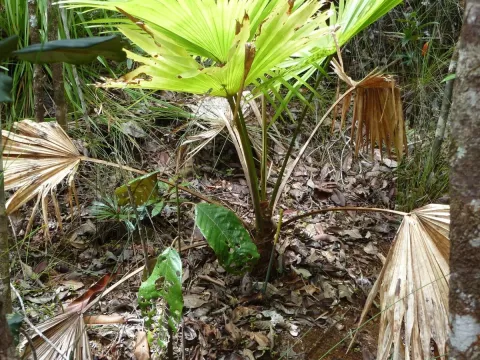
Saribus
Saribus
Saribus is a genus of evergreen tree species belonging to the Arecaceae (palm) family. In the wild, these majestic palms are distributed across the tropical regions of Southeast Asia, including the Philippines, Indonesia, and the islands of Papua New Guinea.
What the section contains


Saribus
The plant thrives in humid tropical forests, typically occupying the understory or sub-canopy layers. The culture is highly temperature-dependent, being strictly thermophilic and incapable of surviving even mild frosts, which limits its cultivation to greenhouses or specific tropical climatic zones.
For healthy development, Saribus requires loose, fertile, and well-drained substrates. The optimal soil pH is slightly acidic to neutral. A critical requirement is consistently high air humidity and a regular, moderate watering schedule to prevent waterlogging, which can be detrimental to the root system.
In terms of agricultural management, light is a paramount factor: the palm prefers bright, filtered sunlight. Direct midday sun can scorch the fronds, especially in juvenile plants; therefore, light shading is highly recommended for indoor and greenhouse specimens.
The primary horticultural use of this genus is in ornamental landscaping and garden design within tropical resorts. Thanks to their large, fan-shaped leaves with deep segments, Saribus palms are prized as striking focal points in park landscapes and exotic botanical collections.
The main threats to Saribus palms include sap-sucking pests such as spider mites and scale insects, which thrive in the low-humidity environments of greenhouses. Effective control measures involve the application of systemic insecticides and acaricides.
Fungal diseases, including leaf spot and root rot, often occur due to improper watering practices and poor air circulation. Prevention is centered on maintaining adequate humidity levels and implementing periodic fungicide treatments at the first signs of pathogen infection.